


Get a responsible approach in promoting client project.
Contact us now!
Contact us now!



 Order a call
  Get an offer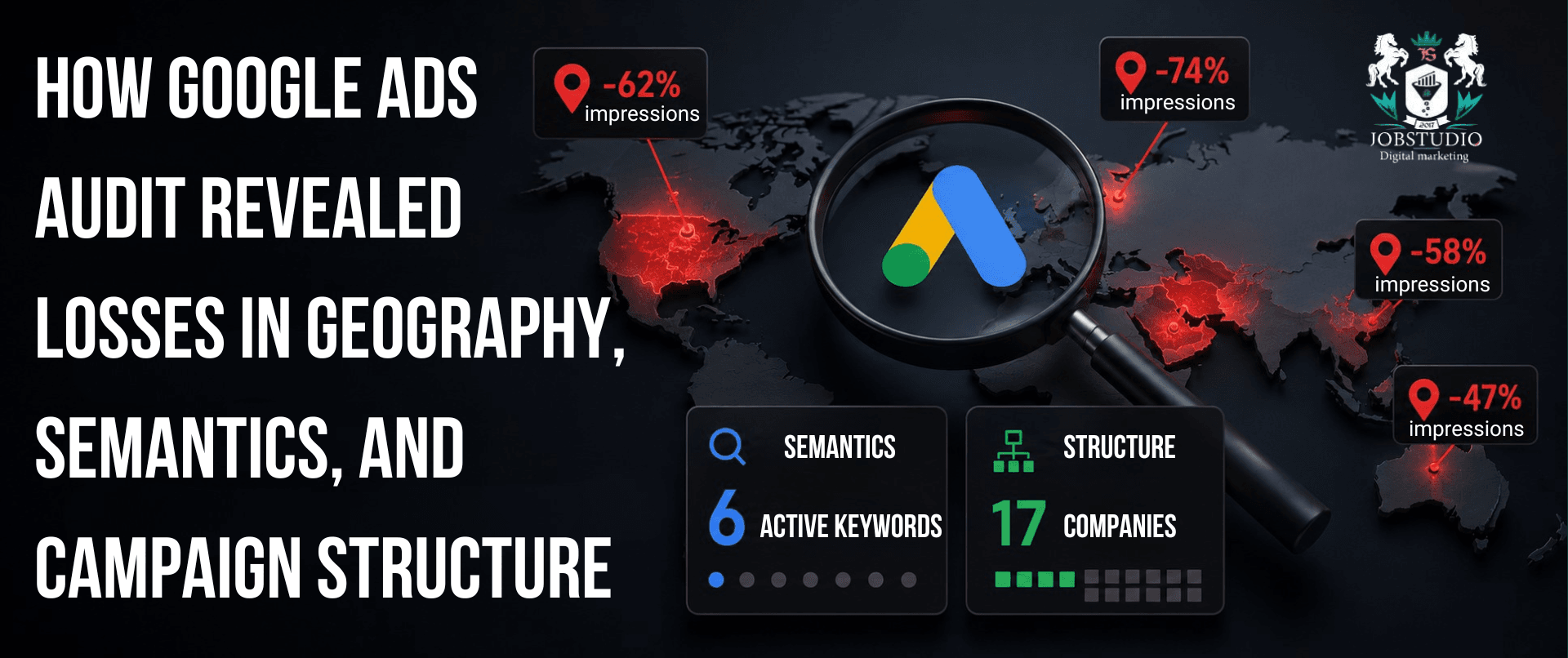
With about 80 countries listed in the Search settings, only 6 active keywords and a faulty script were hindering the project’s international promotion.
Ads may generate clicks and even result in some conversions. But that doesn’t necessarily mean they’re working in line with business goals.
Table of Contents
That’s exactly what we found during our Google Ads audit for the International Travel Insurance Project.
The advertising account already had search campaigns, Performance Max, keywords, and ads. On the surface, everything seemed to be working. However, after comparing the settings with the business goals, it became clear that:
The problem wasn’t just one ad.
The advertising account was operating without a clear division of roles.
Scope and Geographic Focus
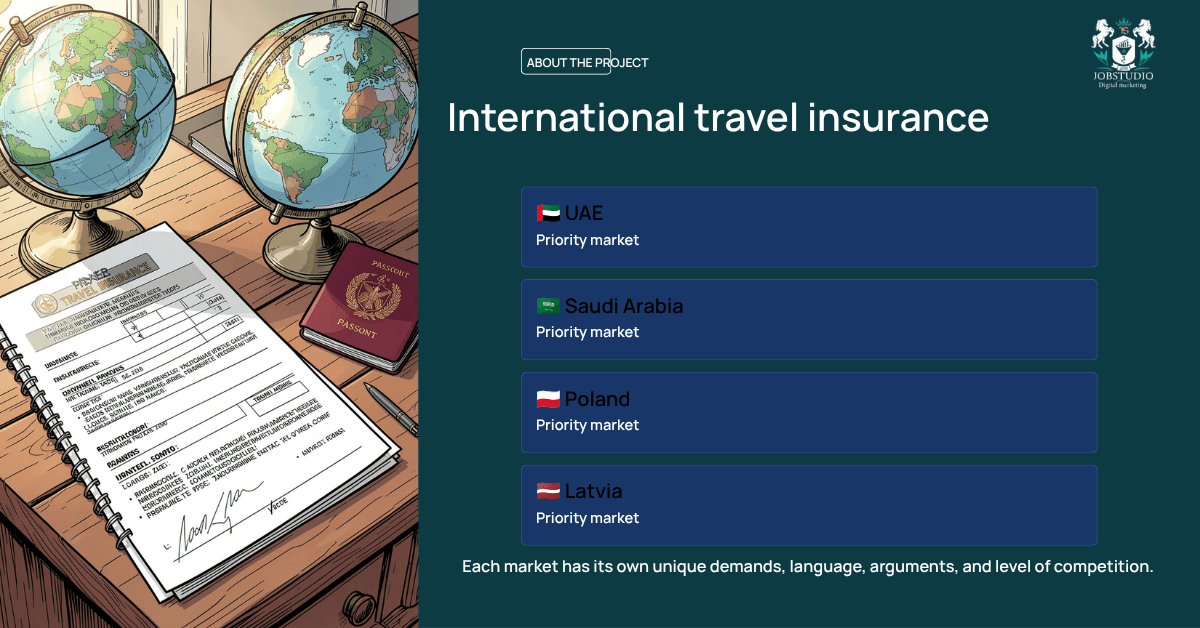
The International Travel Insurance Project operates in the field of travel insurance and is aimed at an international audience.
According to the client, the main markets were the UAE, Saudi Arabia, Poland, and Latvia.
For an international project, it’s not enough to simply select countries in Google Ads. A user in Poland searches for insurance differently than a user in Saudi Arabia. They use different search terms, read in a different language, and focus on different selling points.
Therefore, each major market requires its own keywords, ads, budget, and performance metrics.
The client needed to understand why Google Ads wasn’t capitalizing on the potential of priority markets and what was preventing them from safely increasing their budget.
We checked whether the campaign structure aligns with the business’s geographic reach, whether the target countries are receiving enough impressions, whether the keywords cover demand in different languages, and whether the system filters out irrelevant queries.
The goal was not to compile a long list of mistakes. The aim was to show where advertising is losing reach, demand, and budget control.
The audit covered the account structure, actual geographic reach, keywords, search queries, negative keywords, scripts, ads, ad units, and remarketing.
We looked not only at the settings in the dashboard, but also at how well they aligned with our business goals.
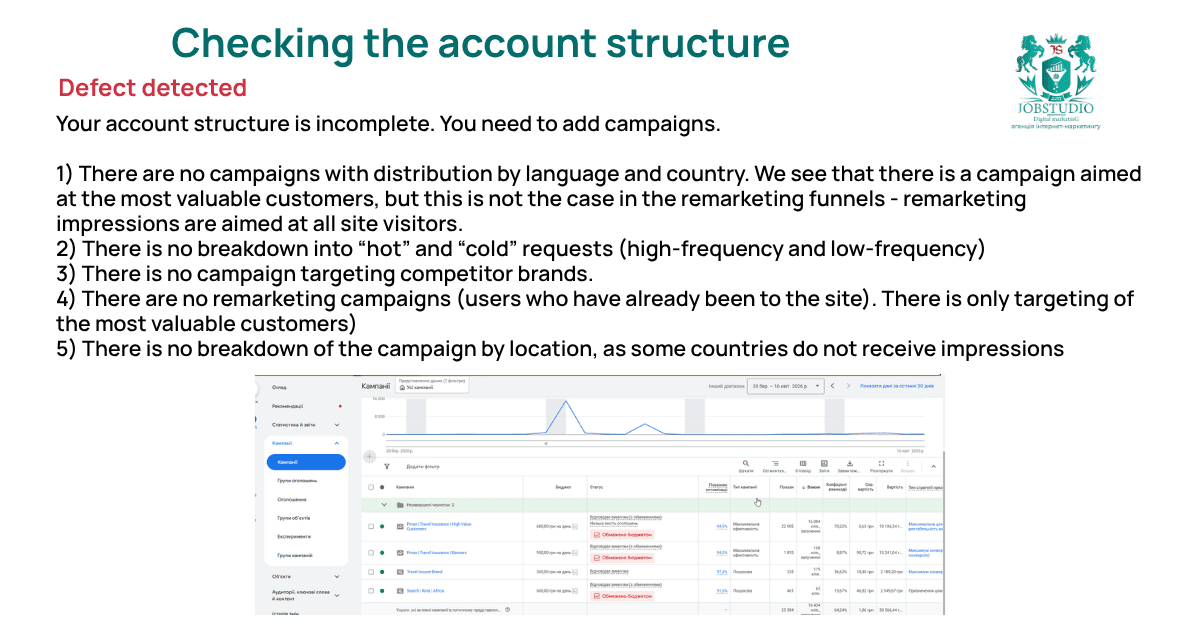
The campaigns were not clearly divided by country or language.
Different markets were mixed together within a single advertising structure. There was also a lack of separate campaigns for high-converting commercial queries, general demand, competitive keywords, and remarketing.
When different countries are combined, businesses see averaged statistics.
One country may generate cheap clicks but low conversion rates. Another may generate more expensive clicks but result in more insurance policies being issued. These differences get lost in a consolidated report.

Because of this, it’s hard to tell which market brings in customers, where the CPA is acceptable, and where to allocate the budget.
For the major countries, we have proposed the following structure:
country → language → demand type → individual campaign → individual budget → individual KPI.
Poland should not be confused with the UAE, because they have different search queries, languages, advertising messages, and levels of competition.
The budget was distributed among too many countries
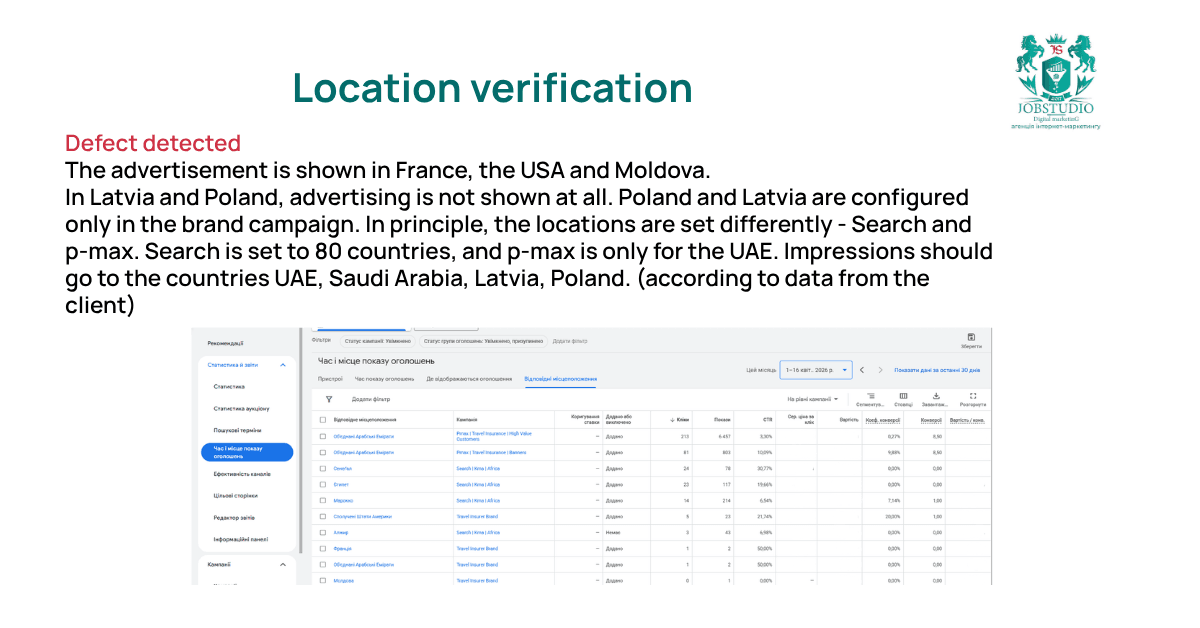
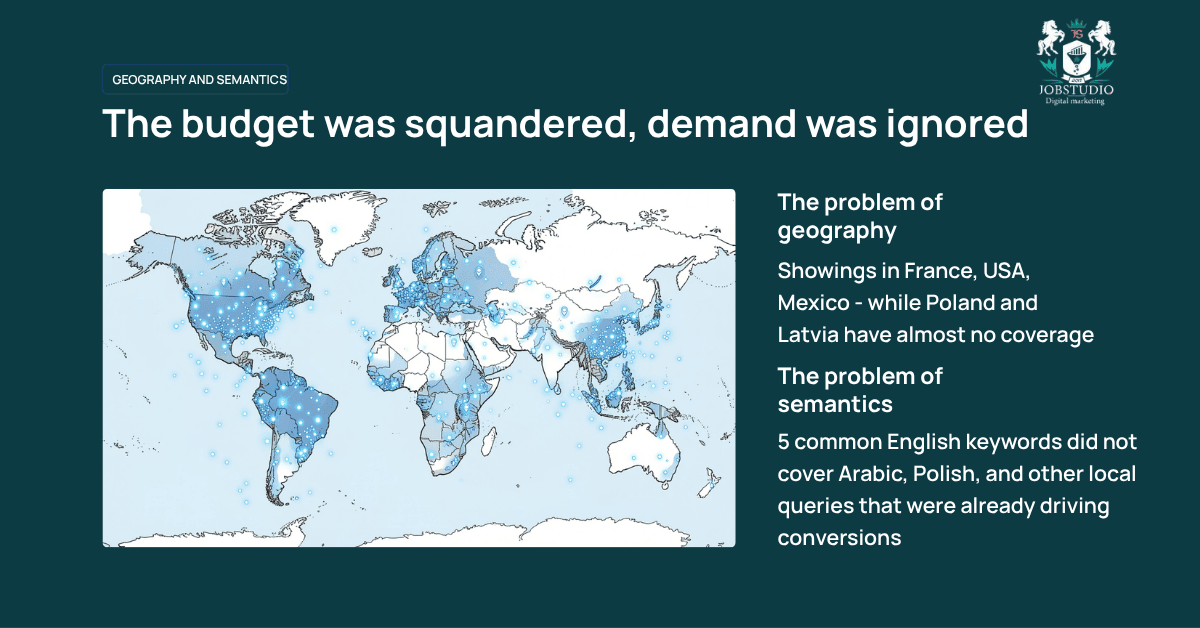
The search campaigns were set up to target approximately 80 countries. Performance Max, meanwhile, was primarily focused on the UAE.
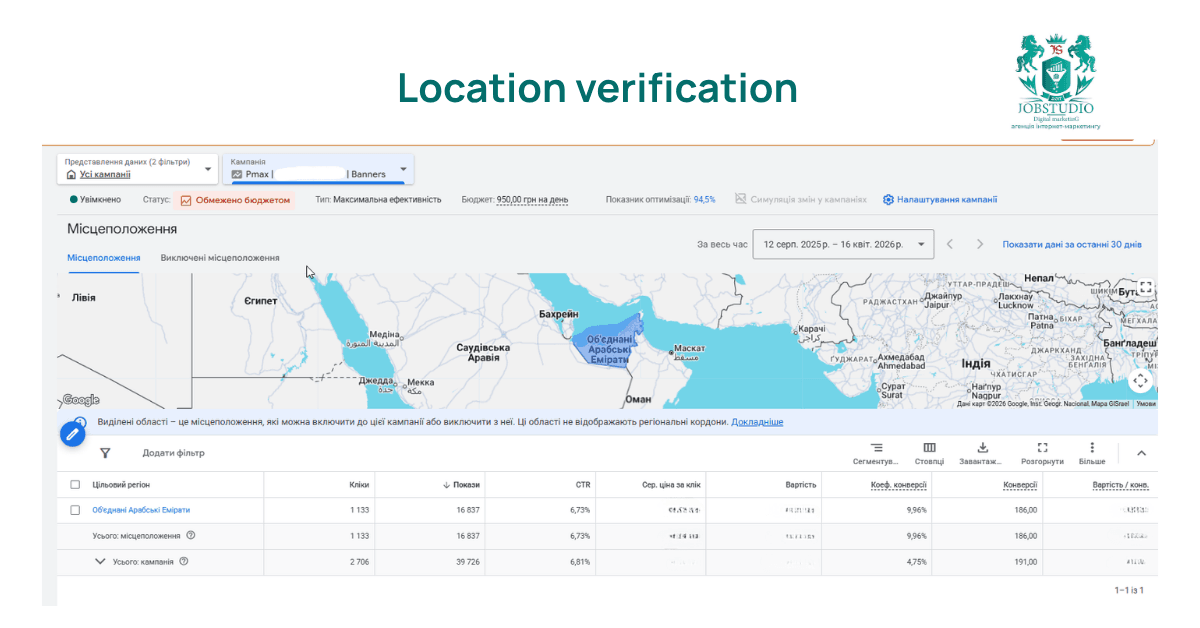
The reports mentioned screenings in France, the United States, Moldova, Austria, Sweden, Italy, Mexico, and other countries.
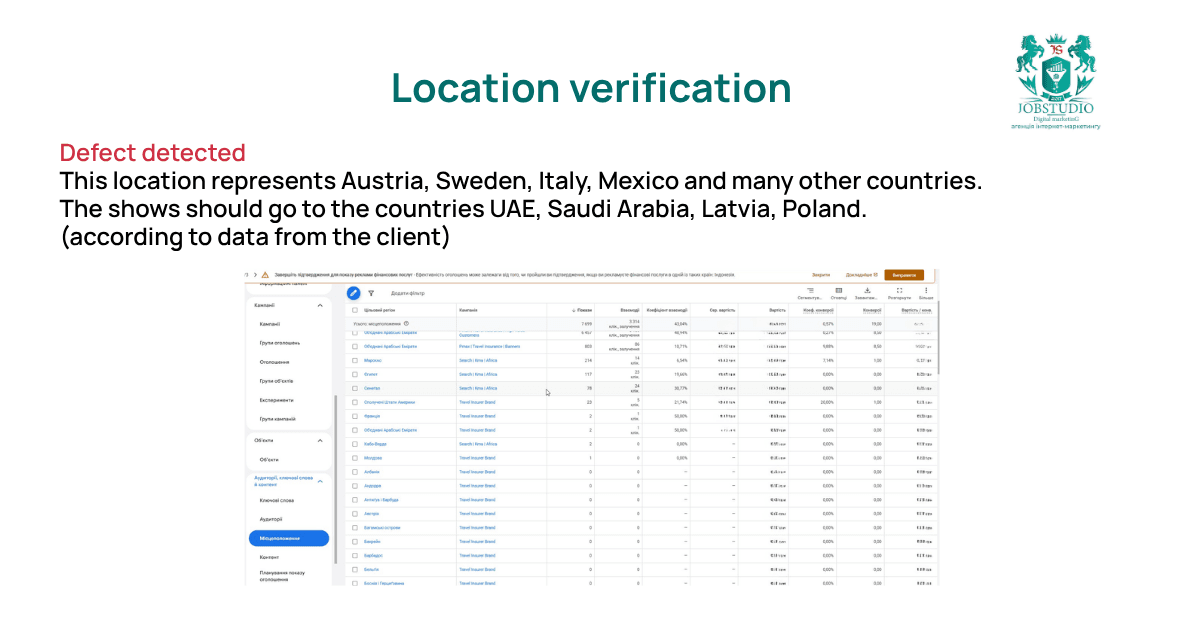
Poland and Latvia, which the client identified as priorities, received almost no impressions.
If the system detects dozens of countries, five common keywords, and a shared budget, it may show ads more frequently in places where it’s easier to get a click.
But a cheaper click in a secondary country doesn’t help if it doesn’t bring in the right customer.
As a result, the budget was spread across many markets, and the key countries did not receive enough metrics and data to optimize their campaigns.
We suggested keeping a clear list of key countries and creating separate campaigns for them.
For each market, you need to set a separate budget, check the geographic settings, and track conversions and CPA separately.
It is advisable to expand the geographic scope only after the main countries have collected enough data.
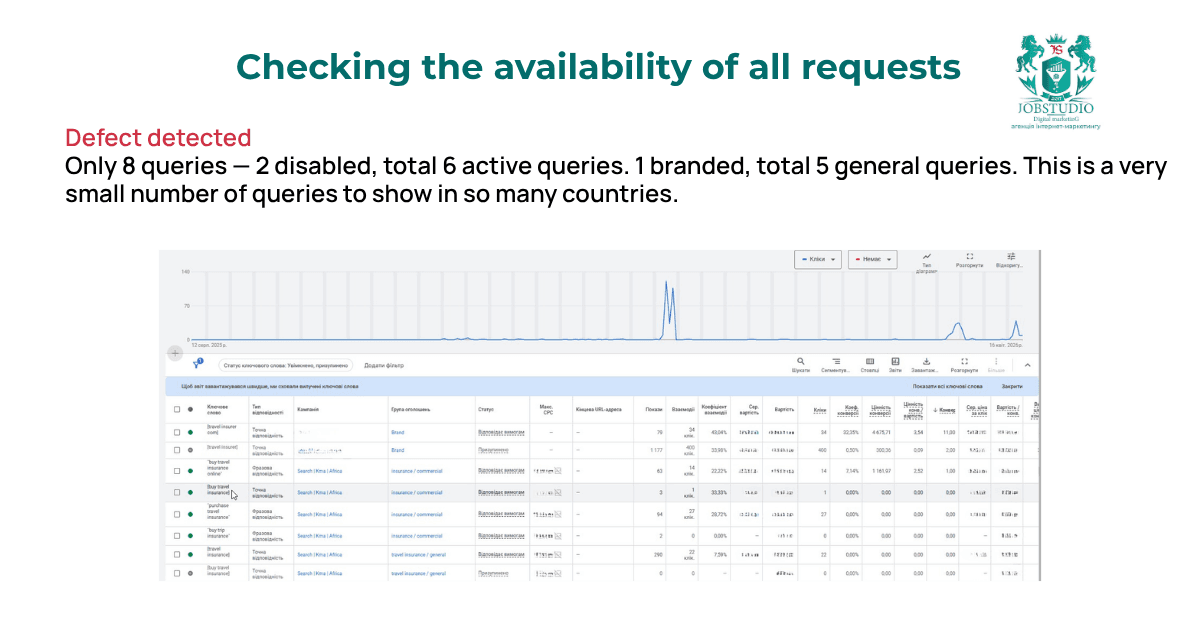
Thus, they attempted to capture international demand using just five general categories.
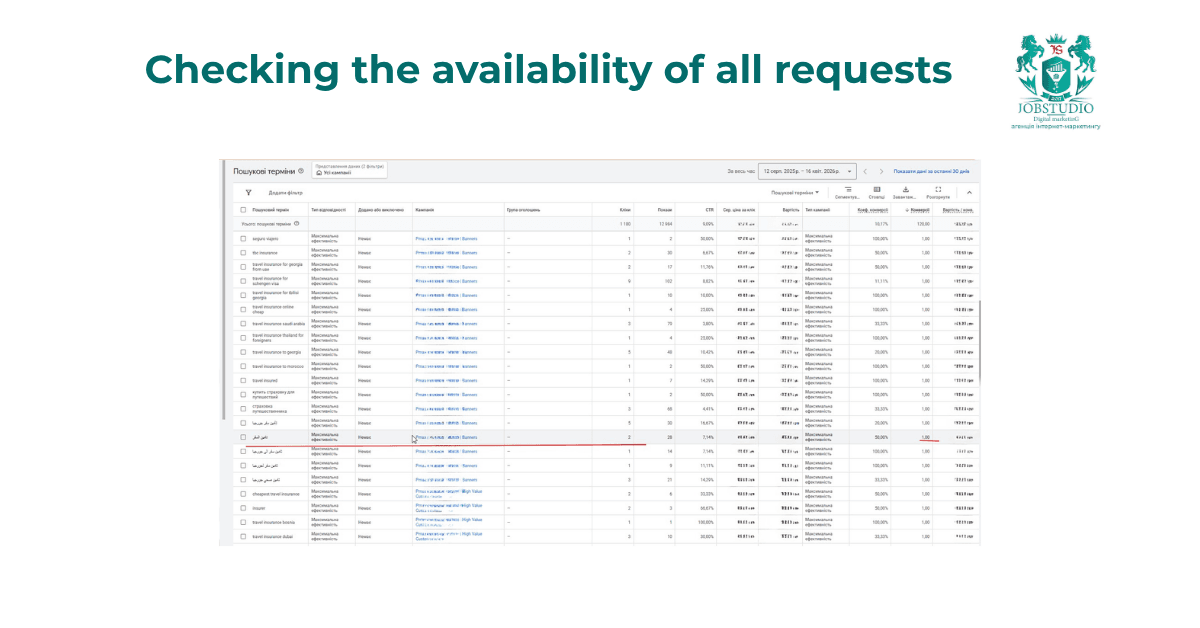
That wasn’t enough for advertising in dozens of countries.
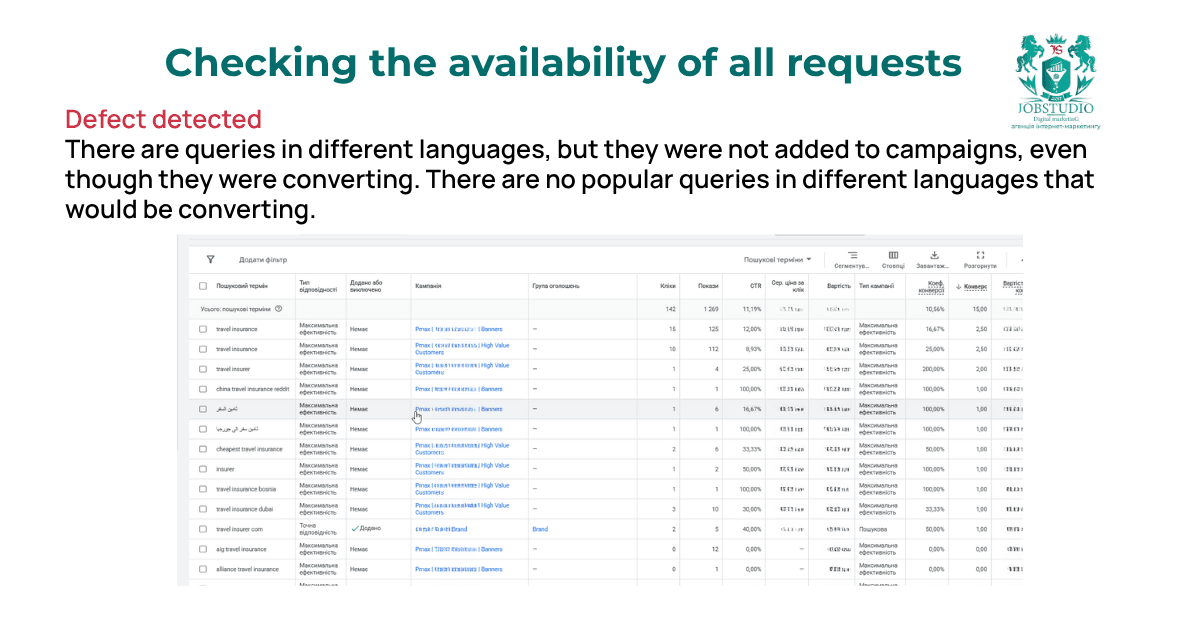
The primary semantics were in English. However, actual search queries already included Arabic, Russian, and other localized phrases. For example, in Poland, ads were shown for English-language search queries, while the campaigns did not include any Polish-language keywords.
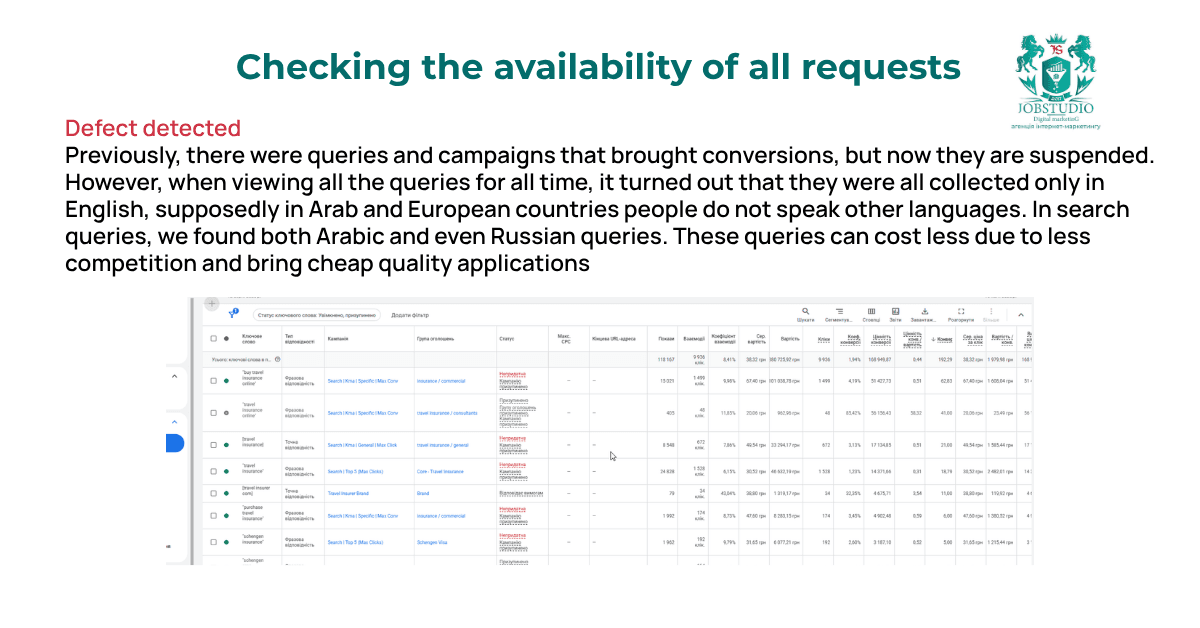
Some of these queries had previously generated conversions but were not added to active campaigns.
The ad might not have reached a user who was searching for the service they needed in their own language. They had the intent, but their search query didn’t match any of the keywords in the account.
Semantics must be collected separately for each country and language.
Within the market, it is worth categorizing queries into branded, high-volume commercial, general product, local, and low-frequency queries.
Competitive keywords can be tested separately so they don’t get mixed in with the main search volume.
The goal isn’t just to add hundreds of keywords. Each cluster should be assigned the correct country, language, ad, and budget.
What We Found
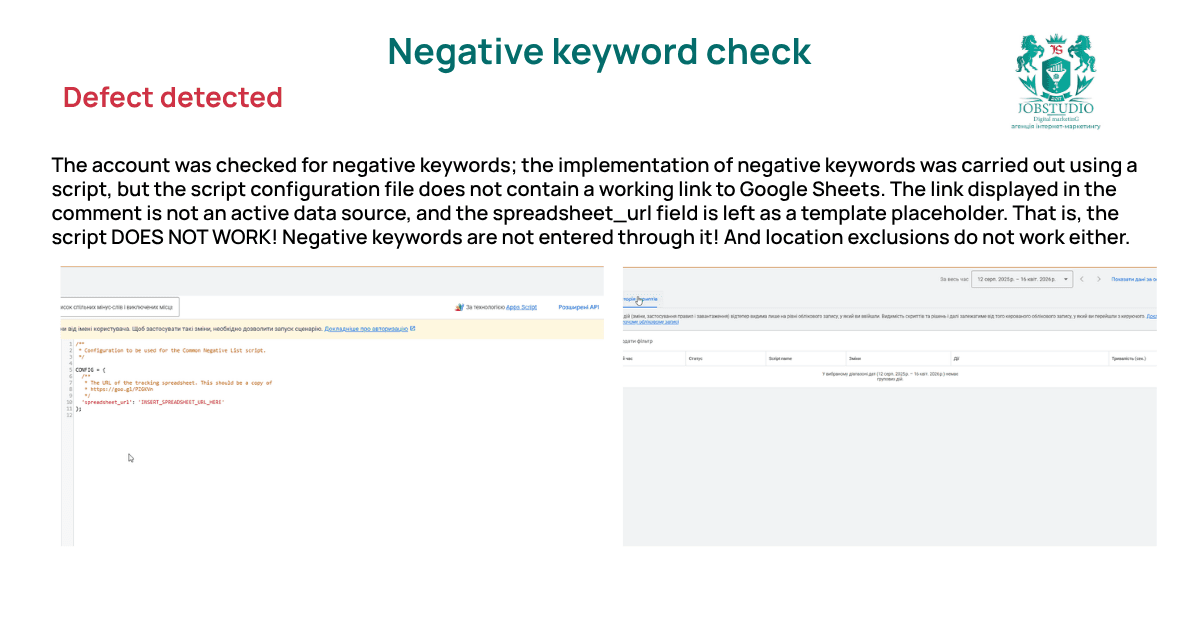
The account had a script that was supposed to automatically add negative keywords and exclude unwanted ad placements.
But there was no working link to Google Sheets in its settings. A placeholder value remained in place of the spreadsheet’s URL.
The script was unable to retrieve data and, therefore, could not add exceptions.
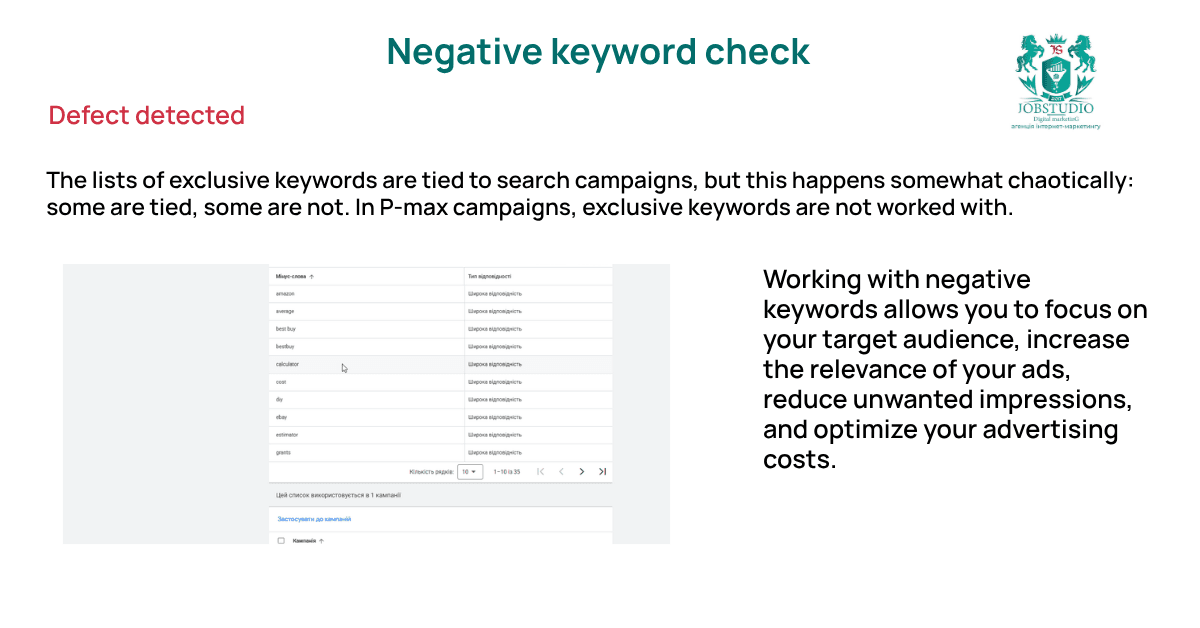
In addition, the negative keyword lists were applied inconsistently: they worked in some campaigns but not in others.
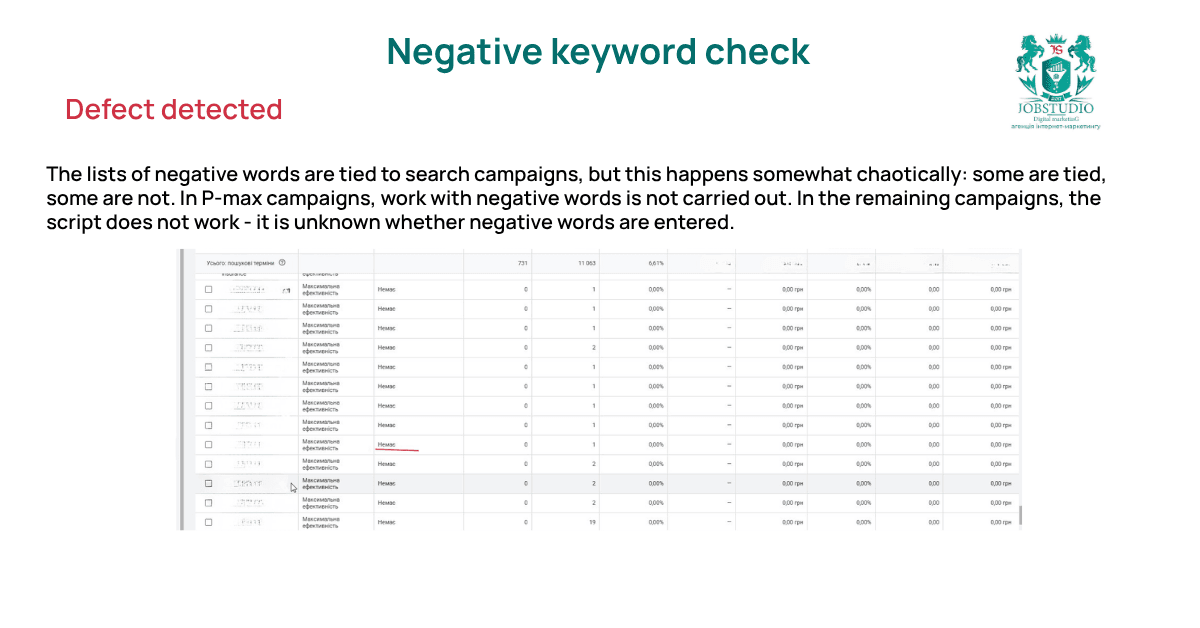
The worst part wasn’t the technical error itself, but the feeling that everything was working.
The team might have seen the script in the dashboard and assumed that it automatically filtered the traffic. In reality, irrelevant queries might have continued to receive impressions.
It’s like an alarm system that’s installed on the door but isn’t plugged in.
First, we had to connect the worksheet, check the access permissions, and run a test.
Next, review the performance reports, compile consolidated negative keyword lists, and determine which campaigns they apply to.
Even after the script has been restored, search queries still need to be checked manually on a regular basis. Automation helps, but it does not replace expert oversight.
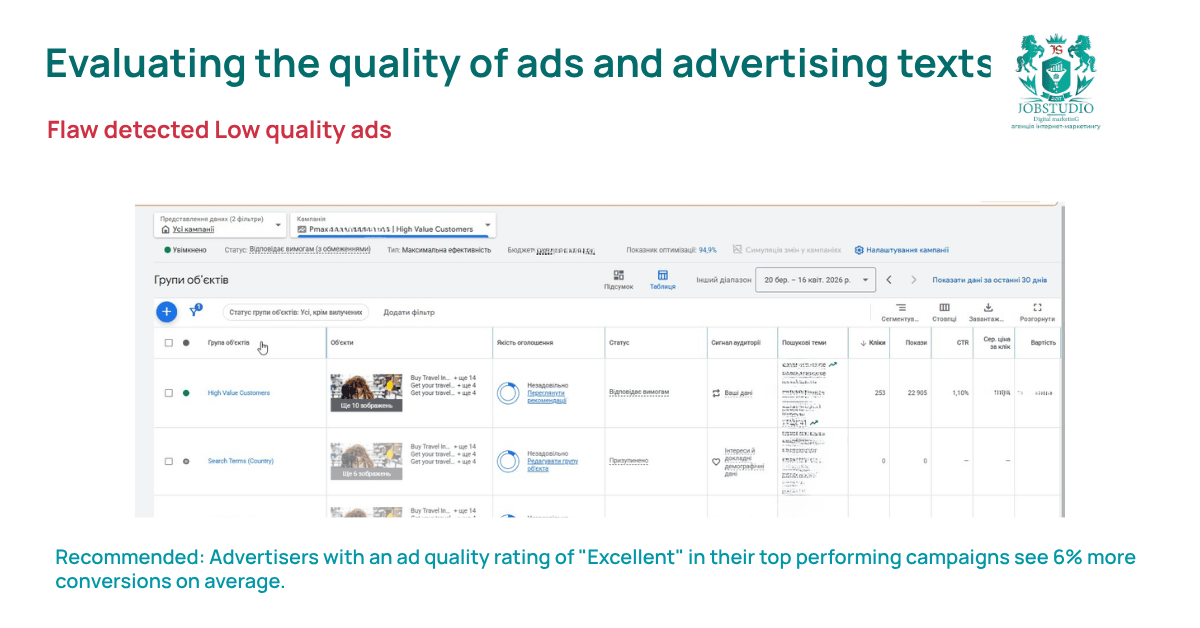
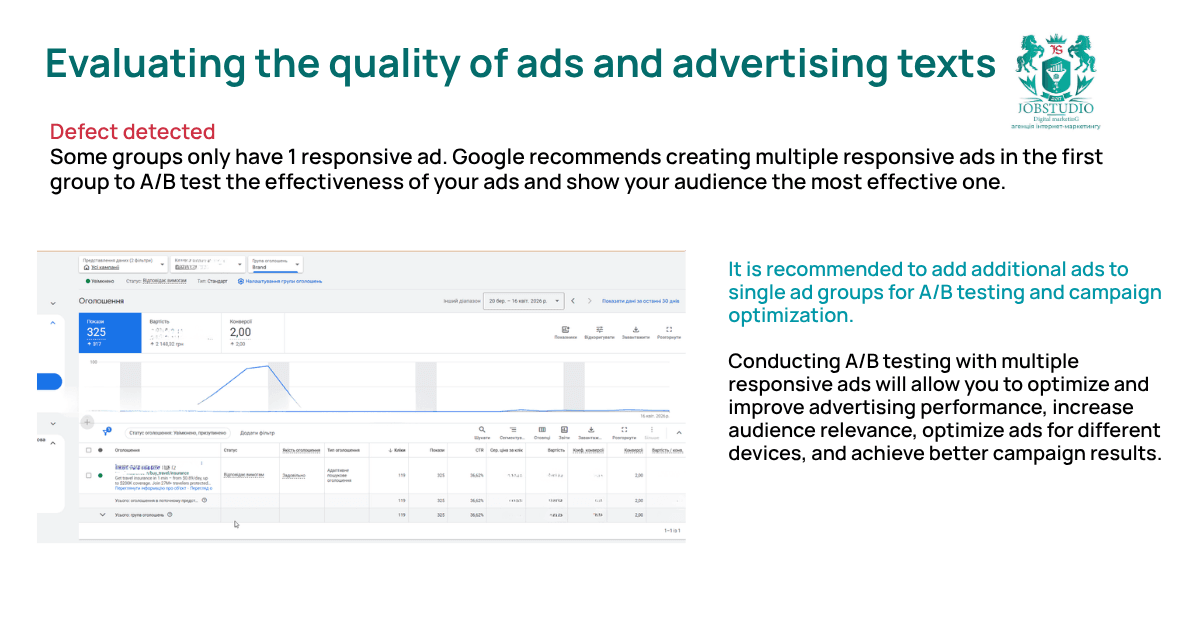
Some of the groups had only one adaptive search ad.
Also, not all advertising spaces were filled in: company name, logo, prices, and promotions.
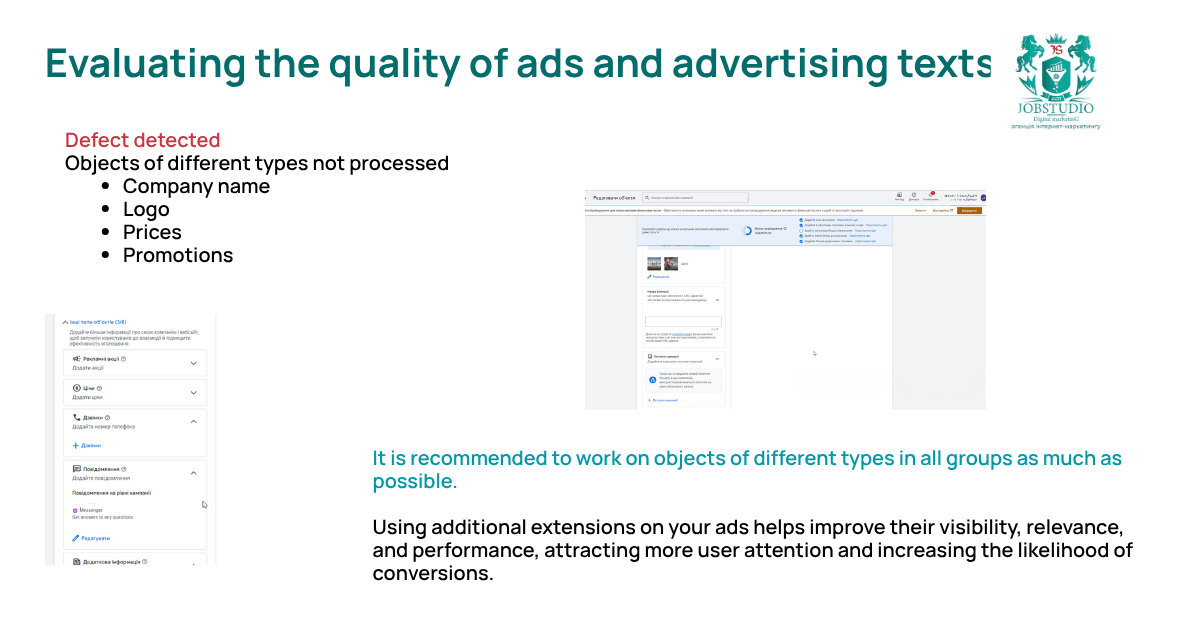
As a result, the system had a limited set of messages and was virtually unable to compare different offers.
Users in different countries may be persuaded by different arguments.
For some, the speed of processing is important. For others, it’s the price. Still others look at insurance coverage or customer support.
When there’s only one ad, the business can’t tell which message works better.
For each priority market, you need to prepare several offers with different content and localize the titles and descriptions.
It’s best to test one prominent hypothesis at a time. For example, compare emphasizing price with emphasizing fast checkout.
It’s not just CTR that needs to be evaluated. A high click-through rate is worthless if it doesn’t result in any leads.
There were individual audiences in the account, but they didn’t form a clear remarketing funnel.
A new visitor, someone who has returned to the site several times, and a user who has already viewed key pages might see the same ad.
A new visitor needs to be given an explanation of the product and to build trust.
Someone who is already familiar with the proposal needs a different argument: a response to an objection or a return to an unfinished action.
When everyone sees the same ad, remarketing becomes nothing more than a simple repetition of the ad.
Audiences should be segmented by behavior, country, language, and level of readiness.
Users who have already completed the desired action should be excluded from some campaigns. For other segments, configure different participation periods, notifications, and display frequencies.
| What they found | What the business stood to lose | What to Do |
|---|---|---|
| The search covered approximately 80 countries | The budget went to secondary countries | Identify priority markets |
| Poland and Latvia received almost no screenings | Major countries remained without coverage | Launch individual campaigns |
| There were only 6 keys in the work | Local searches were excluded from advertising | Expand semantics by language |
| The script was not linked to the table | Irrelevant queries were not filtered out | Restore and test the script |
| The lists were not used in all campaigns | The budget was defended unevenly | Standardize Exceptions |
| There weren’t many ads | The business didn’t know which offer was better | Build a test suite |
| Remarketing was not segmented | Different users saw the same ad | Create individual scenarios |
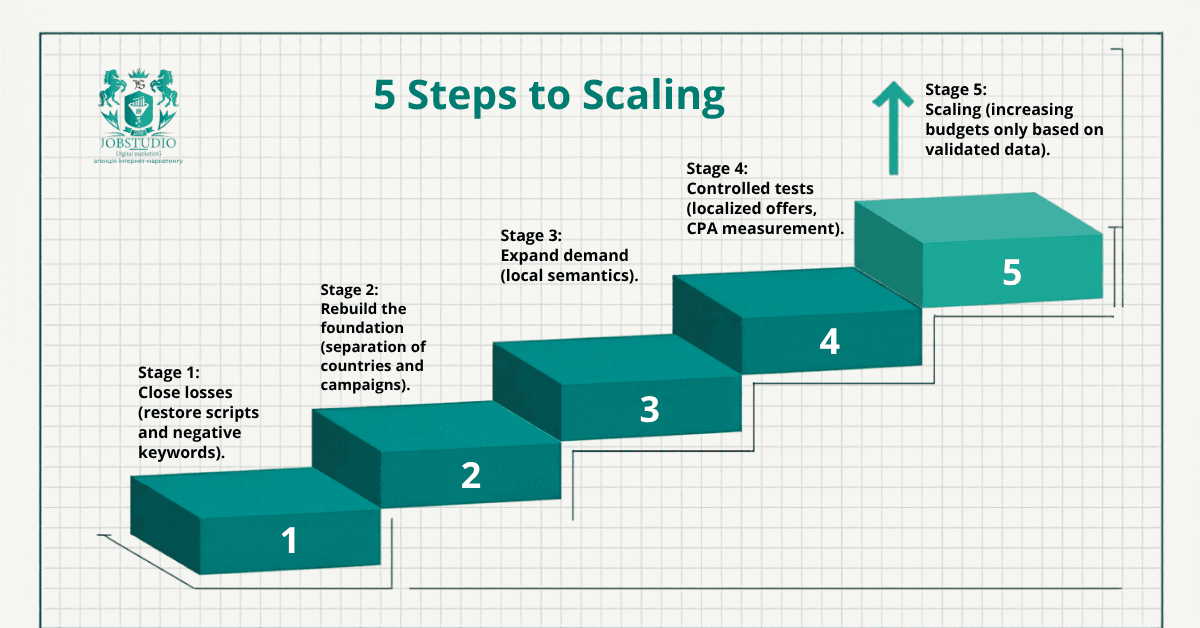
First, you need to restore the negative-word script, test it, and compile a single list of exceptions.
At the same time, it’s worth eliminating secondary countries and aligning your geographic focus with your current business goals.
For priority countries, we need to create separate campaigns and segment them by language, brand, and general demand.
Each market should be allocated its own budget and performance metrics.
After restructuring the campaign, you can gather local semantic data, bring back historical queries that have already generated conversions to your tests, and add low-frequency commercial keywords.
For each market, you need to prepare several offers, localize the text, and add ad assets.
Once the campaign is up and running, it’s important to compare not only clicks but also conversions and their cost.
You can increase your budget once it becomes clear which country is delivering results, which language yields the best conversion rates among your audience, which search terms drive targeted traffic, and what CPA is acceptable.
In that case, scaling is based on data rather than assumptions.
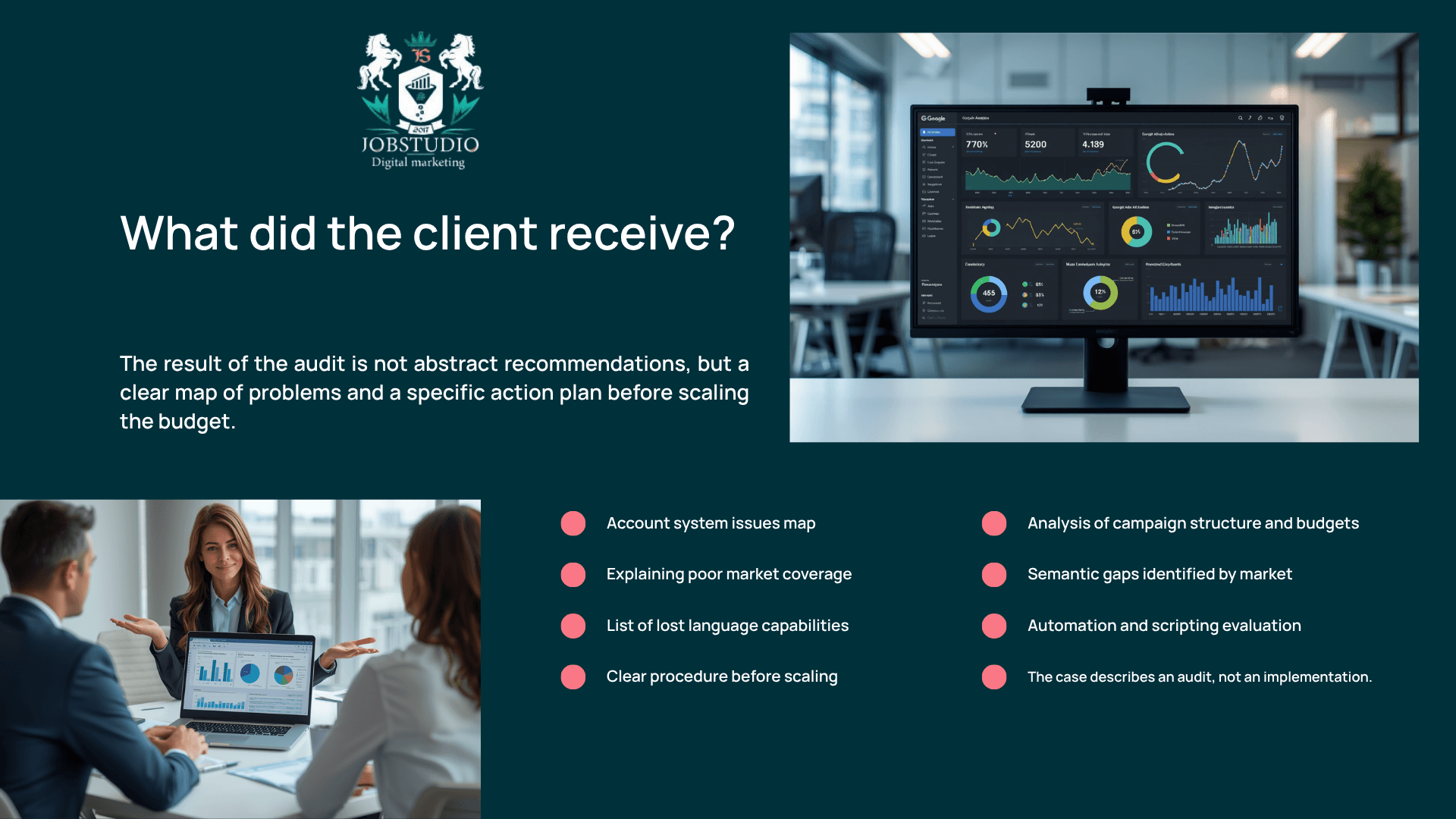
This case study describes the audit, not the results of subsequent implementation. Therefore, we do not claim a reduction in CPA or an increase in sales without supporting data.
The client received a map of system issues, an explanation of the reasons for poor coverage in priority countries, and a list of missed linguistic and semantic opportunities.
The main outcome was a plan of action: what to fix immediately, what to revamp afterward, and which campaigns to test before increasing the budget.
An audit is not a substitute for implementation. It shows the way forward.
A standard audit would show the number of campaigns, keywords, ads, negative keywords, and geographic targeting.
But on their own, these data don’t explain much.
Having about 80 countries isn’t necessarily a mistake. They become a problem when a business has four main markets, only six active keywords, and makes almost no use of local semantics.
Similarly, a single ad isn’t always a failure. But it gets in the way if a company wants to figure out which offer works better in Poland and which one works better in the UAE.
JobStudio’s boutique approach to this audit consisted of specific actions. We aligned the settings with business goals, reviewed historical queries, identified an unconnected script, and distinguished critical issues from minor improvements.
The purpose of the audit is not to alarm the client with the number of errors, but to identify the causes of losses and outline a course of action.
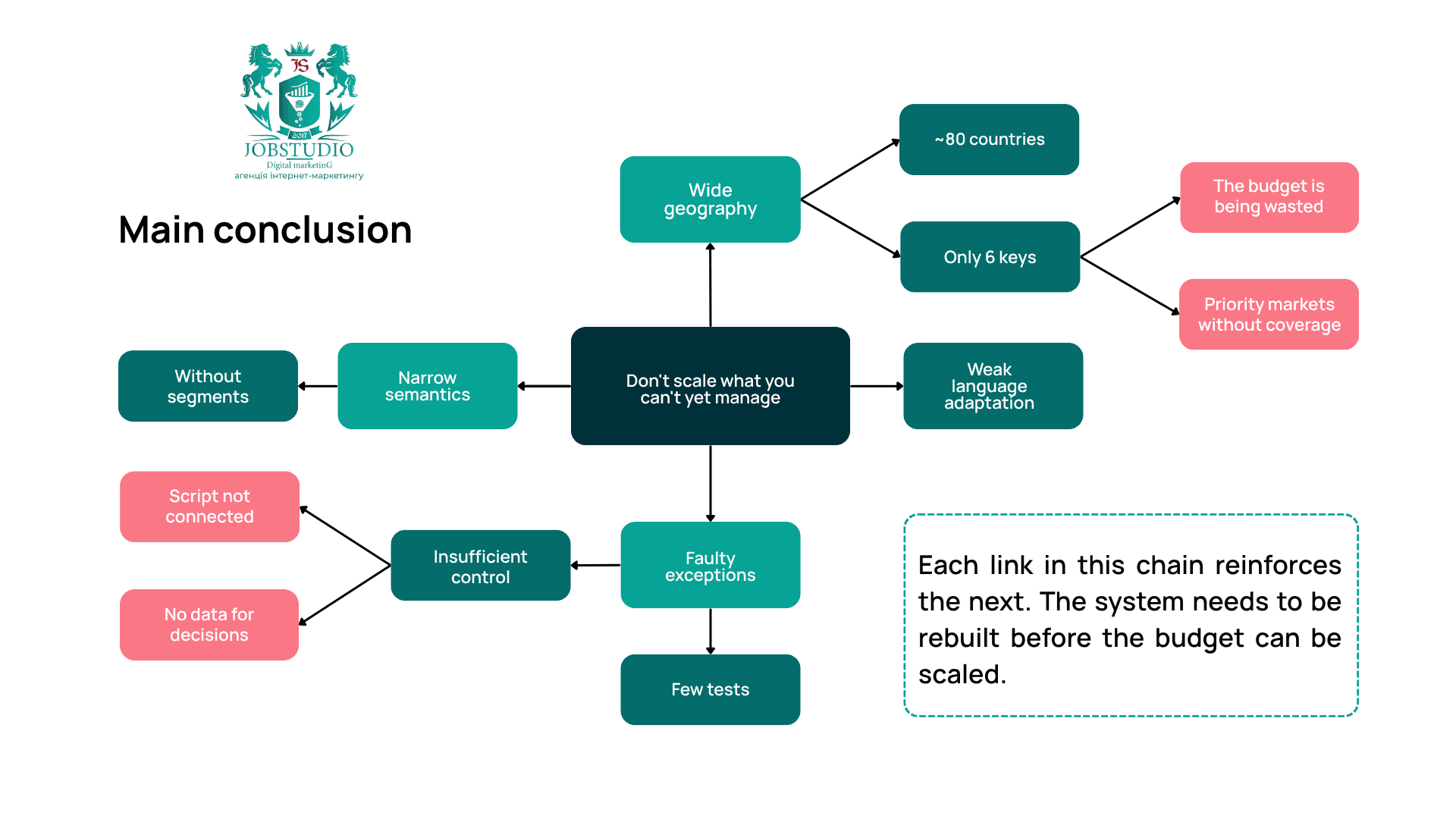
The problem wasn’t just one clue or announcement.
The audit revealed a whole chain of events:
too broad a scope → narrow semantics → poor language adaptation → incorrect exceptions → few tests → insufficient testing.
In such a system, increasing the budget does not solve the problem. It merely increases spending based on the same logic.
Before scaling up, a business needs to know which country brings in customers, which language works best for advertising, which search terms generate target demand, and what CPA is considered acceptable.
Don’t scale something you can’t yet manage.
Individual conversions do not prove that an ad campaign is reaching its full potential. An audit reveals whether a business is overspending, whether the budget is allocated correctly, and whether it’s possible to get better results from the existing account.
This is because the ad campaign targeted dozens of countries, while some of the priority markets received almost no impressions. A larger budget could have exacerbated the existing imbalances.
The project worked with several countries and languages. Six keywords could not cover all the ways in which users search for travel insurance.
It creates the illusion of automatic budget protection. If the script isn’t connected to a data source, negative keywords aren’t added, and unnecessary queries continue to receive impressions.
An audit identifies where your ads aren’t performing well and what needs to be fixed. Management involves the subsequent implementation, testing, and regular monitoring.
When you can see which countries, languages, search queries, and ads drive target conversions at a price that’s acceptable for your business.
Not sure if your ads are reaching the right audience and in the right countries?
Type “AUDIT”—we’ll review your campaign structure, geographic targeting, keywords, and areas where your budget is being wasted.
You’ll get a clear plan: what to fix now, what to test next, and what’s ready to scale.
.webp)
 Contacts
 Language
 Book a call
 Order a proposal


