


Get a responsible approach in promoting client project.
Contact us now!
Contact us now!


 Order a call
  Get an offer
Smart Temple is a store selling educational toys for children on the Rozetka marketplace. Main categories: activity boards, activity cubes, dollhouses, and ant farms. The client approached JobStudio with a task not just to “run ads,” but to increase sales and streamline the entire sales system within the marketplace: from product listings and feed structure to payment, delivery, promotions, and daily performance monitoring.
Table of Contents
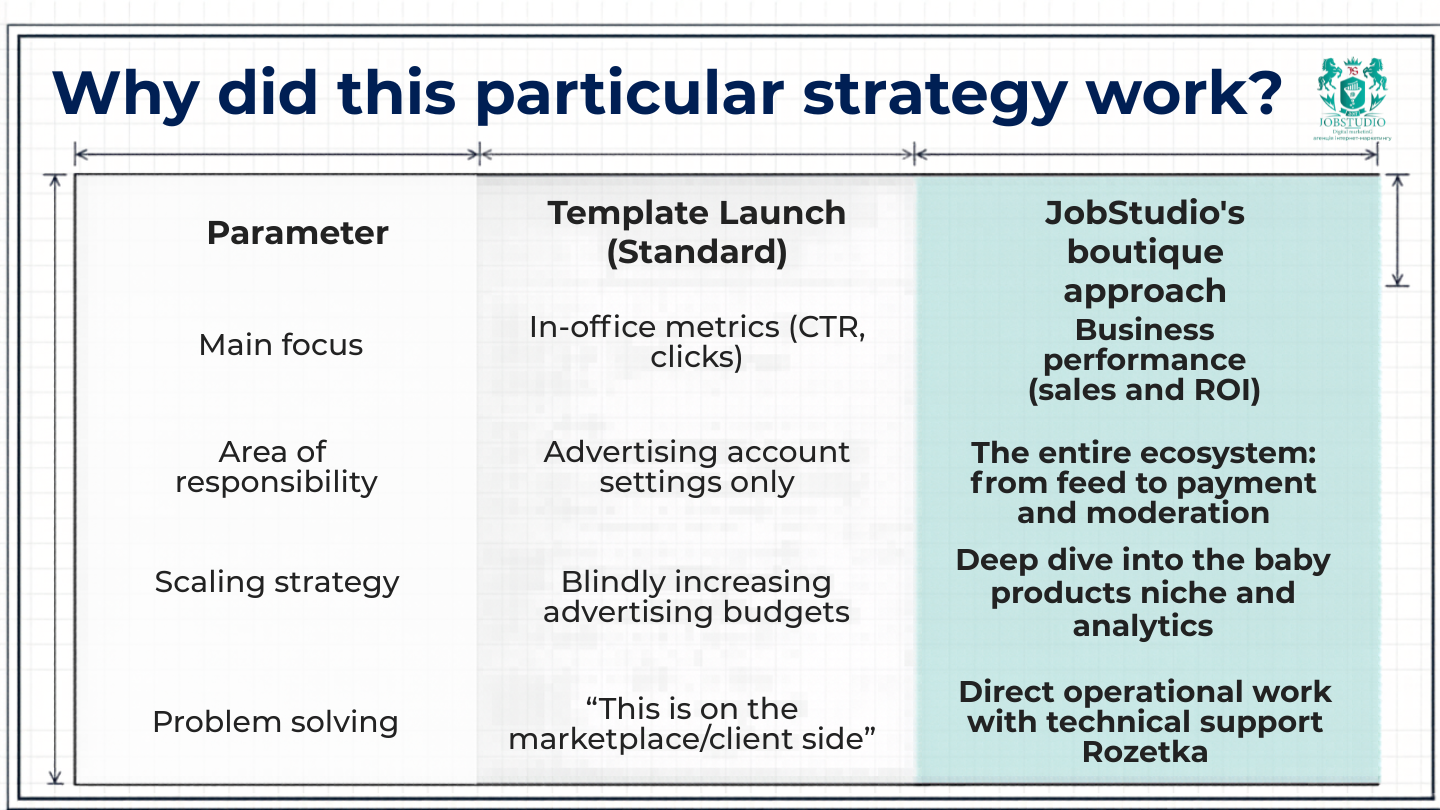
On marketplaces, it often seems like the problem is solely with advertising. But in practice, sales are most often held back not by a single glitch, but by a whole chain of minor issues: product listings, specifications, moderation, payment, shipping, promotions, and advertising. That was exactly the situation with this project. If a product listing lacks specifications, delivery is set up incorrectly, some products fail moderation, and ads run on top of technical chaos, the budget is simply wasted without any real return. That’s exactly why we approached the project as a boutique agency: without a cookie-cutter approach, with deep immersion in the niche, direct work by experts, and a focus on business results rather than a “pretty report.”

The project focused on the category of educational products for children. The store featured products for which high-quality photos, accurate specifications, proper categorization, clear delivery terms, and trust in the product page are particularly important on Rozetka. The project presentation highlighted the main product groups: activity boards, activity cubes, dollhouses, and ant farms.
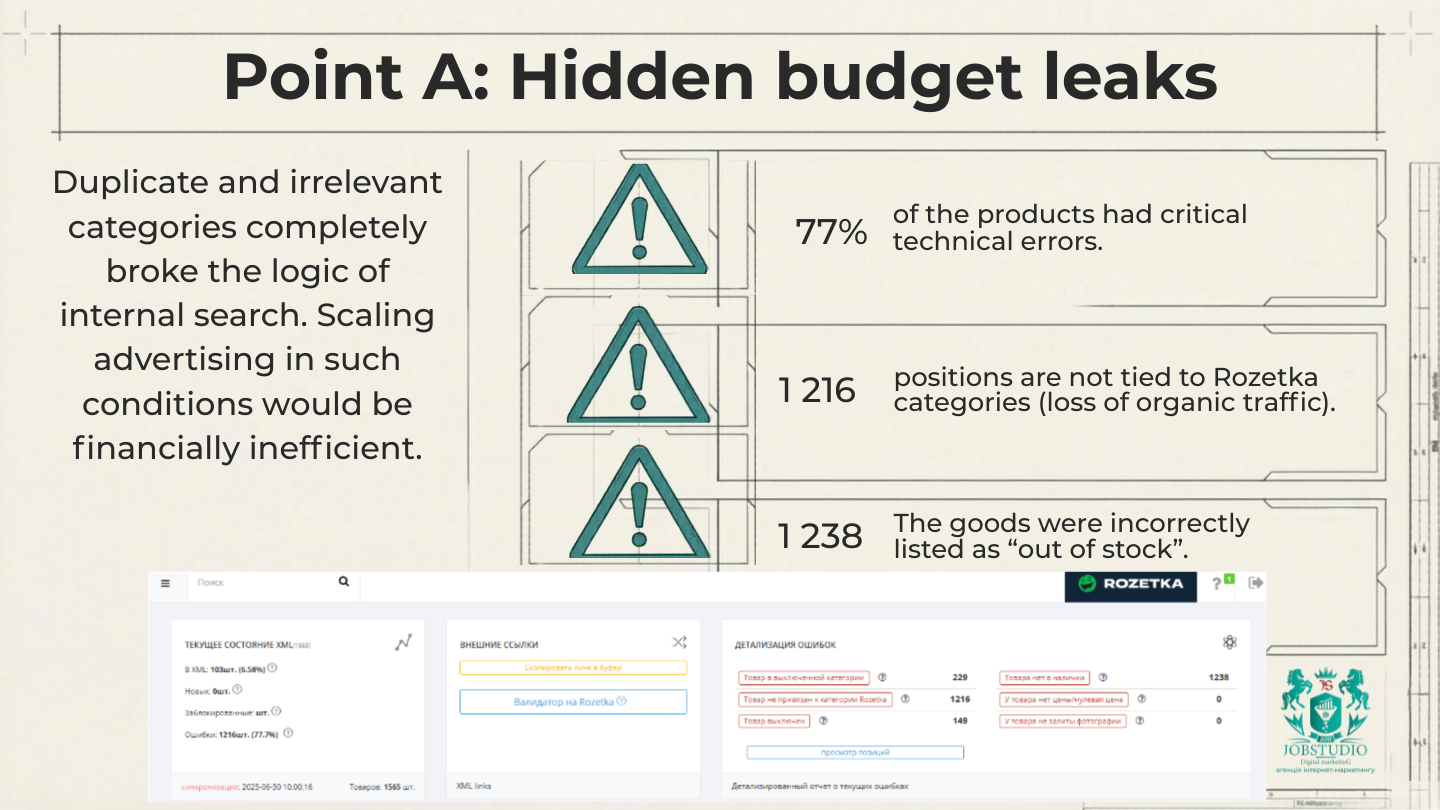
On the surface, the store was already operating on Rozetka, so it might have seemed that simply ramping up advertising would be enough to drive growth. But behind the scenes, the system was already losing sales across several areas simultaneously: product listings, the XML feed, categorization, delivery, payment, and promotional logic. During the audit, we saw that the problem wasn’t a single factor, but rather systemic failures across several areas: product listings, XML feeds, categories, advertising, delivery, payment methods, and visual design. Until these issues were resolved, any scaling of advertising campaigns would have been premature and financially ineffective.
During the store audit, critical errors were identified:
77% of products contained errors, 1,216 items were not assigned to Rozetka categories,
1,238 products were listed as out of stock, and part of the product range was duplicated or placed in outdated or deleted categories. This served as the starting point for a complete restructuring of the feed, product listings, and promotion strategy.
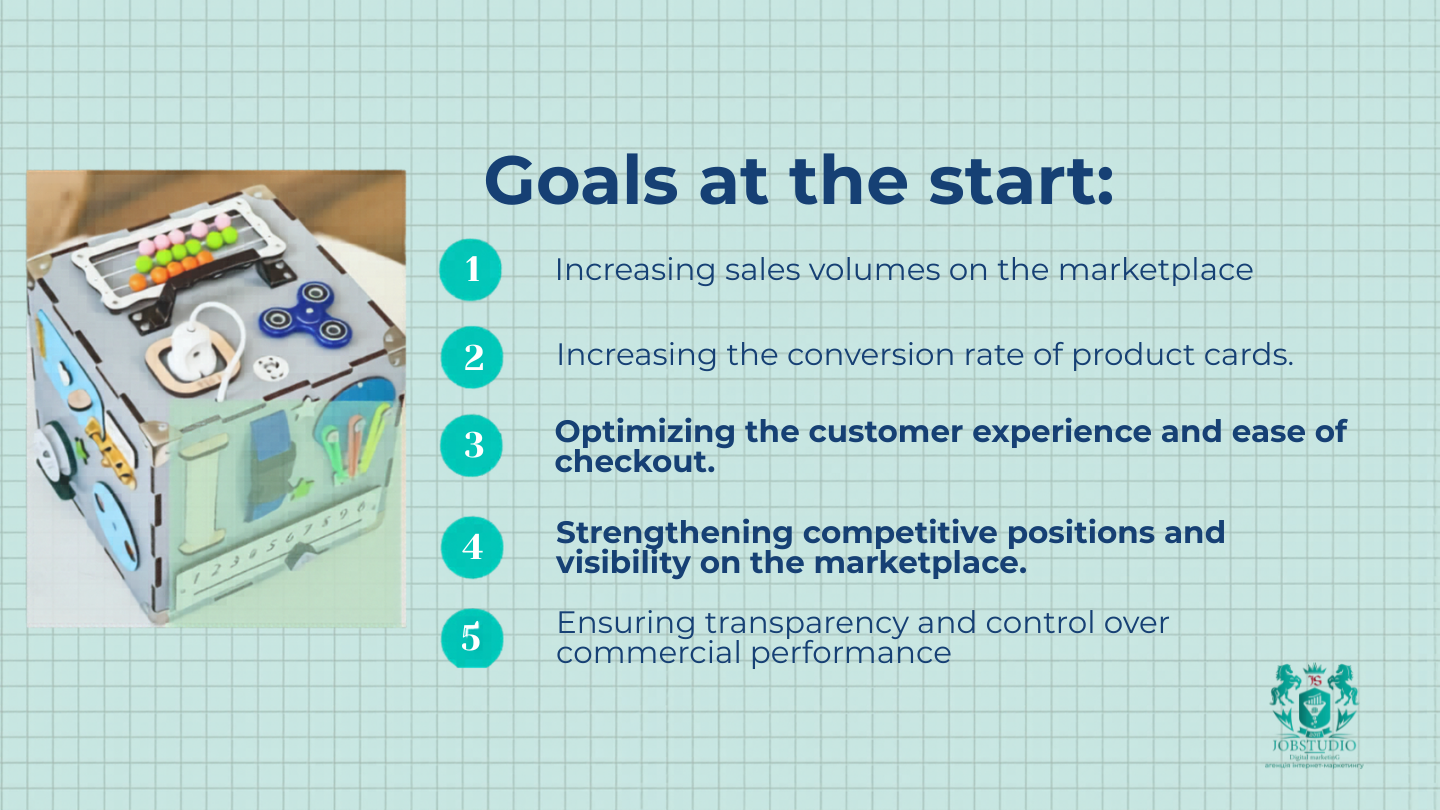
Together with the client, we identified five practical goals:
to increase sales on the marketplace, boost product page conversion rates, improve the checkout experience, strengthen the store’s competitive position, and make key performance indicators transparent for regular monitoring.
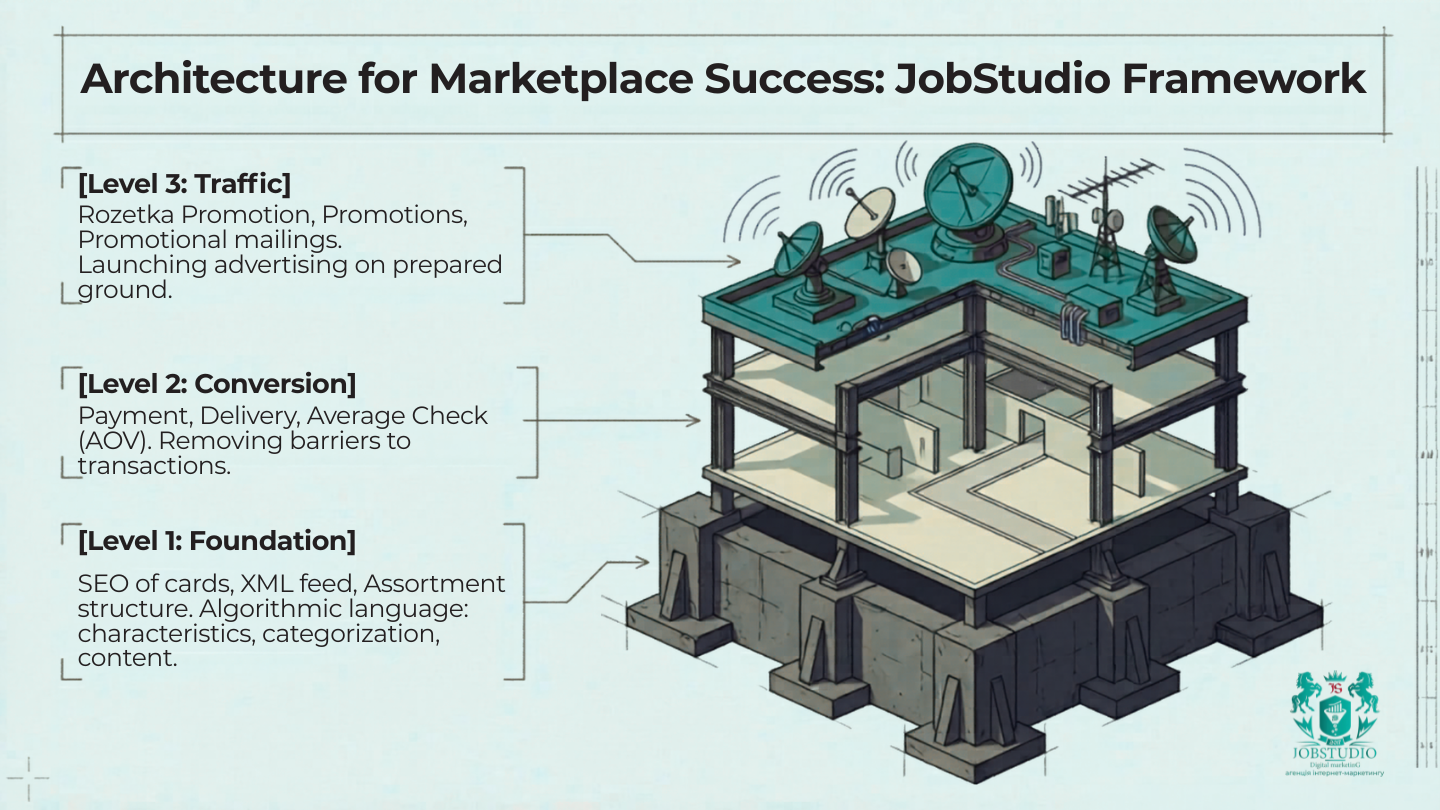
We didn’t start with advertising; we started with the basics. First, we conducted a competitive analysis: we looked at prices, product page designs, description structures, product specifications, and competitors’ advertising approaches on Rozetka. At the same time, we reviewed the client’s account itself: categories, errors in the product feed, photos, prices, stock levels, product assortment logic, and technical issues that were preventing products from displaying properly.
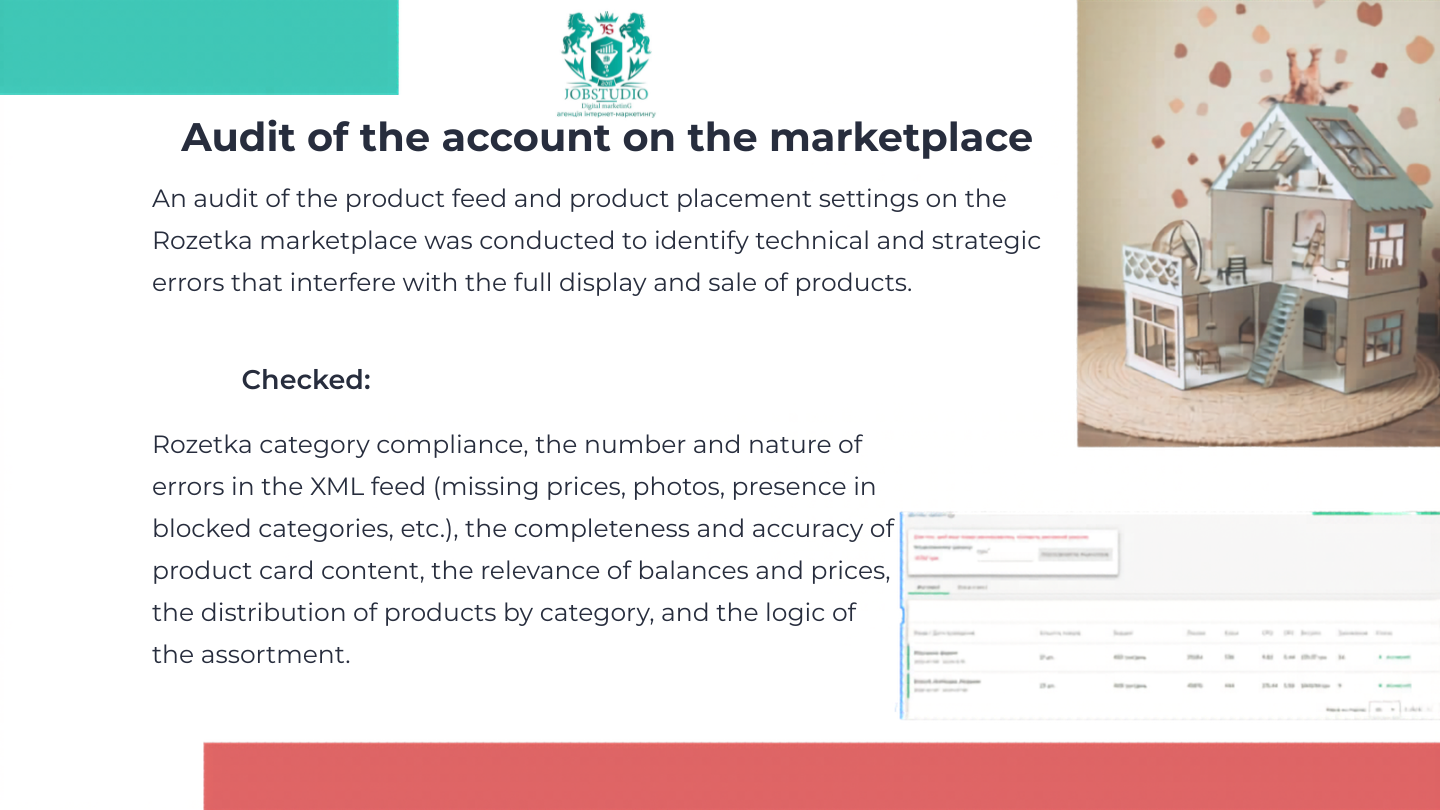
This gave us not just an abstract audit, but a clear roadmap of the issues: where the store is losing visibility, what’s hindering conversions, and exactly what barriers are preventing products from reaching customers.
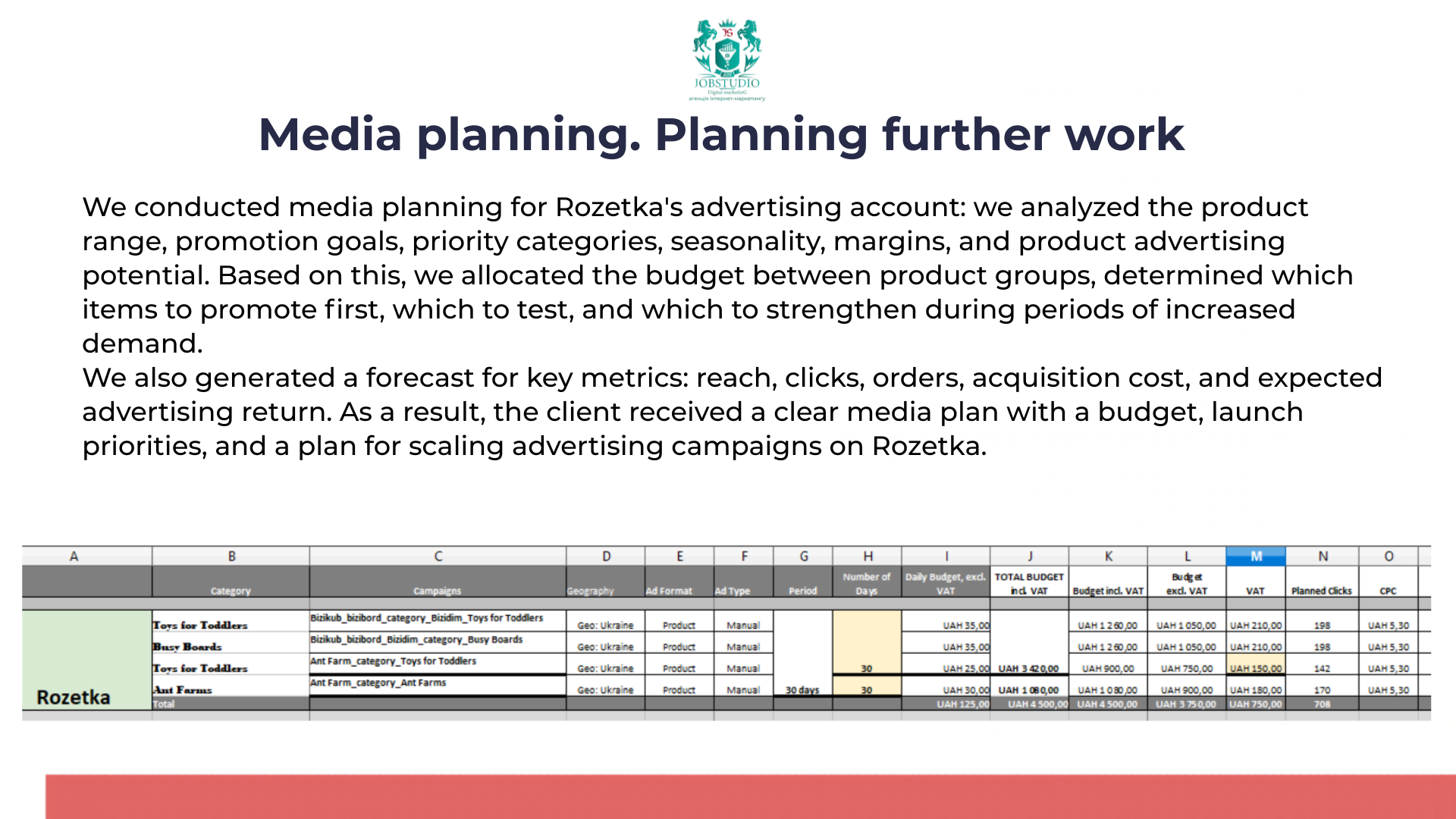
We handled media planning for Rozetka’s advertising department: we analyzed the product range, promotional goals, priority categories, seasonality, profit margins, and the advertising potential of products. Based on this, we allocated the budget across product groups, determined which items to promote first, which to test, and which to boost during periods of high demand.
We also developed forecasts for key metrics: reach, clicks, orders, cost per acquisition, and expected return on advertising. As a result, the client received a clear media plan that included a budget, launch priorities, and a strategy for scaling advertising campaigns on Rozetka.
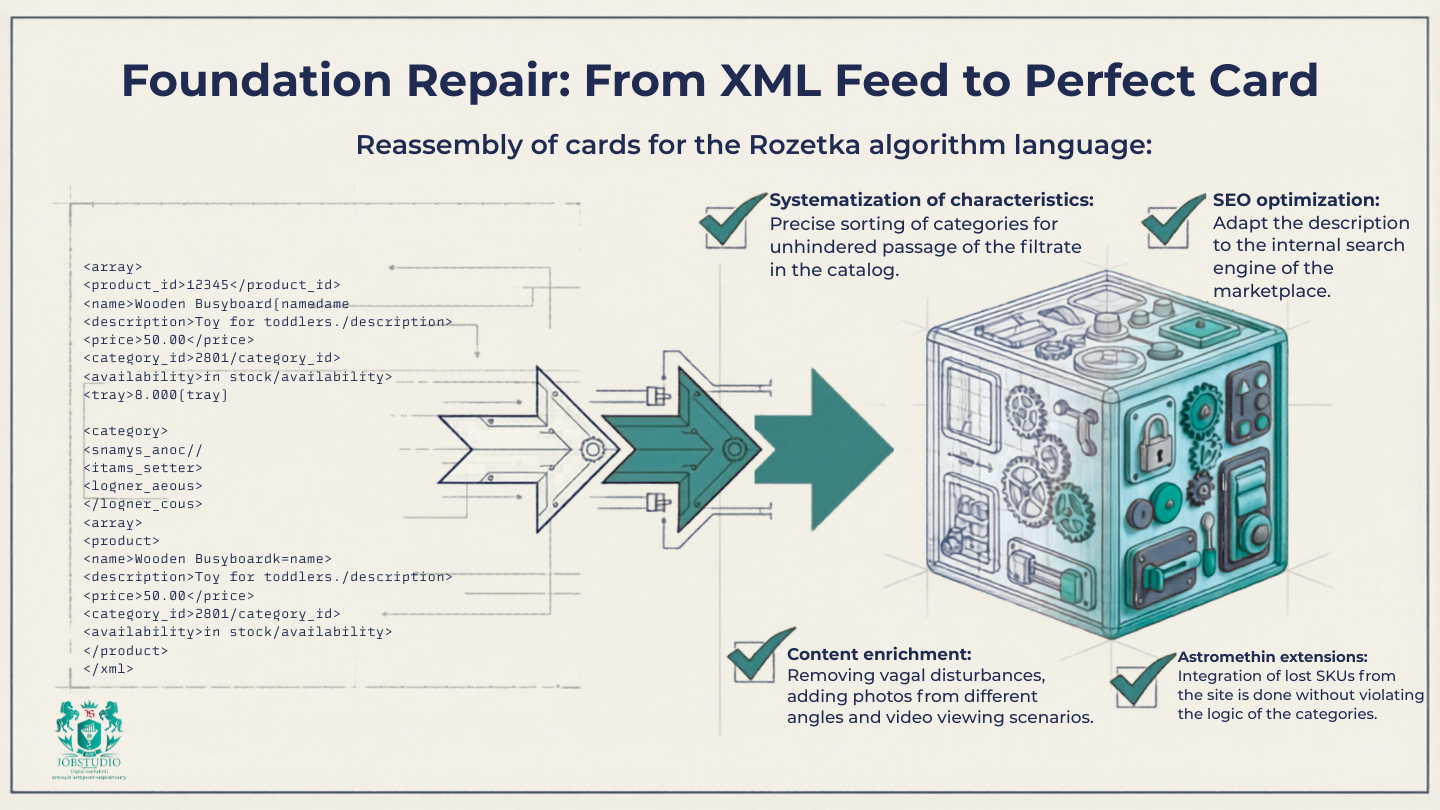
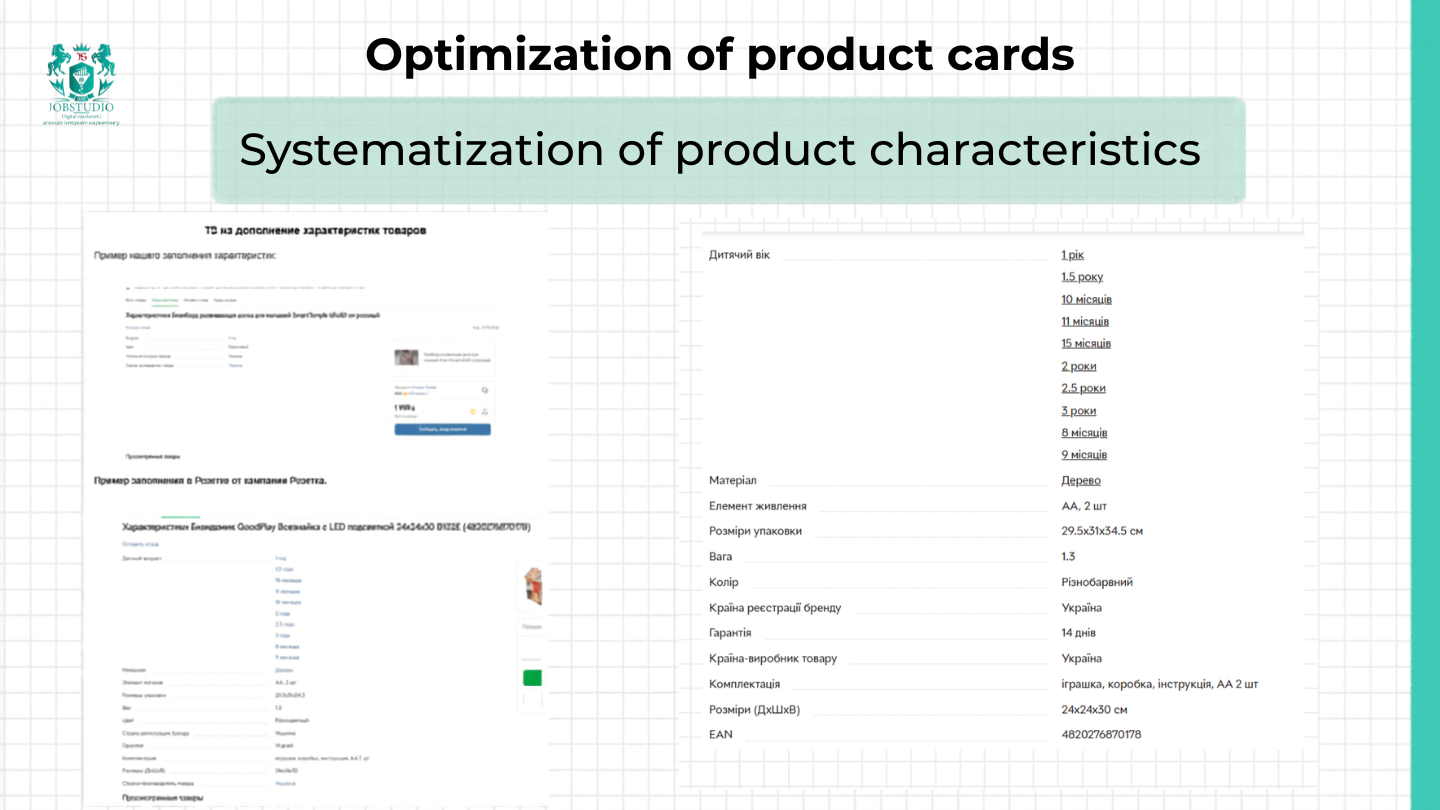
Next, we moved on to the product pages. We prepared SEO-optimized descriptions for the products, taking into account keywords and Rozetka’s internal search logic. We organized the product specifications according to category requirements so that the products would be filtered correctly, displayed properly in the catalog, and be easier to find in search results.
We also updated the photo content: we corrected visual design issues, added high-quality images from various angles, and prepared the cards for moderation.
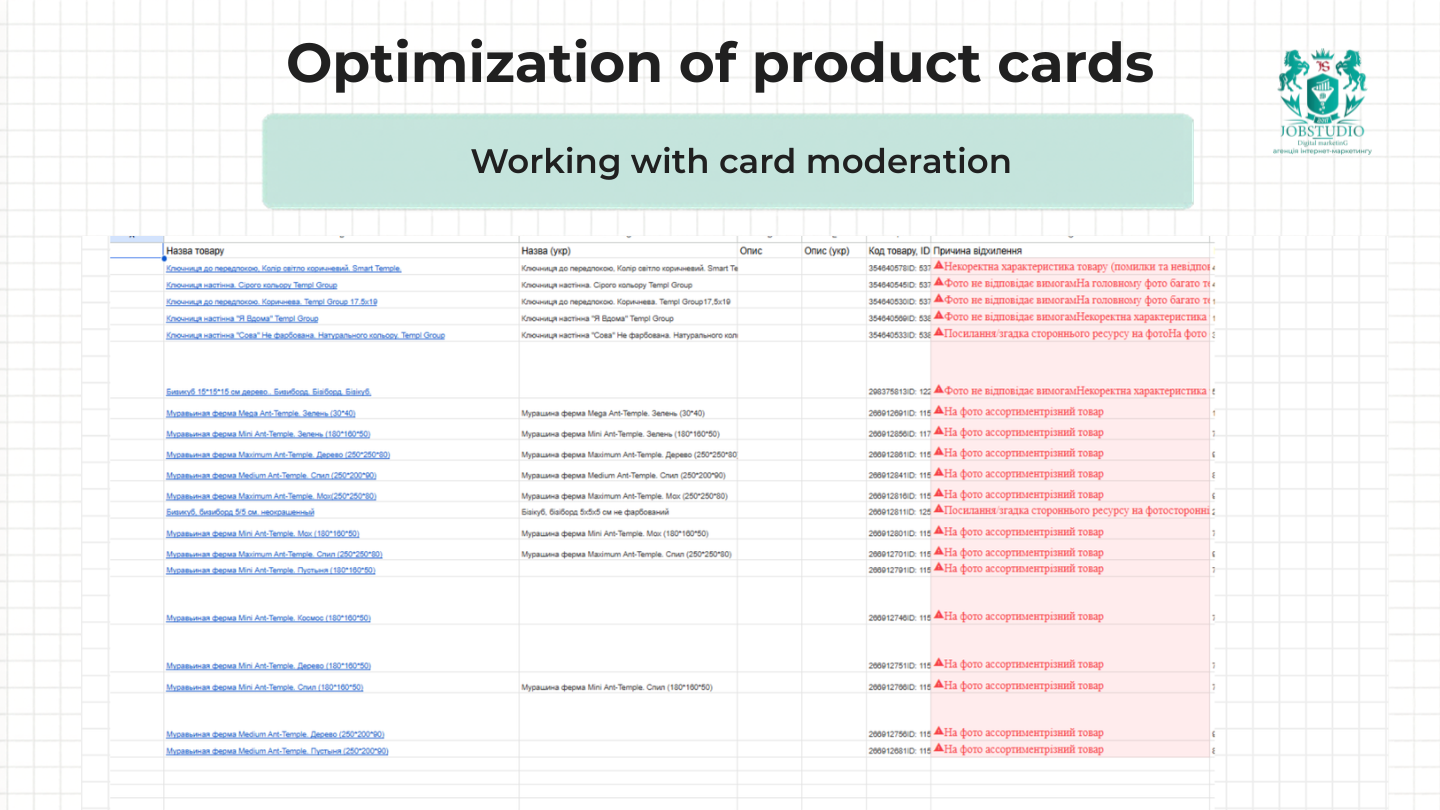
The violations have been resolved, including those such as “The photo shows a different range of products,” which ensured that the products successfully passed moderation and were published.
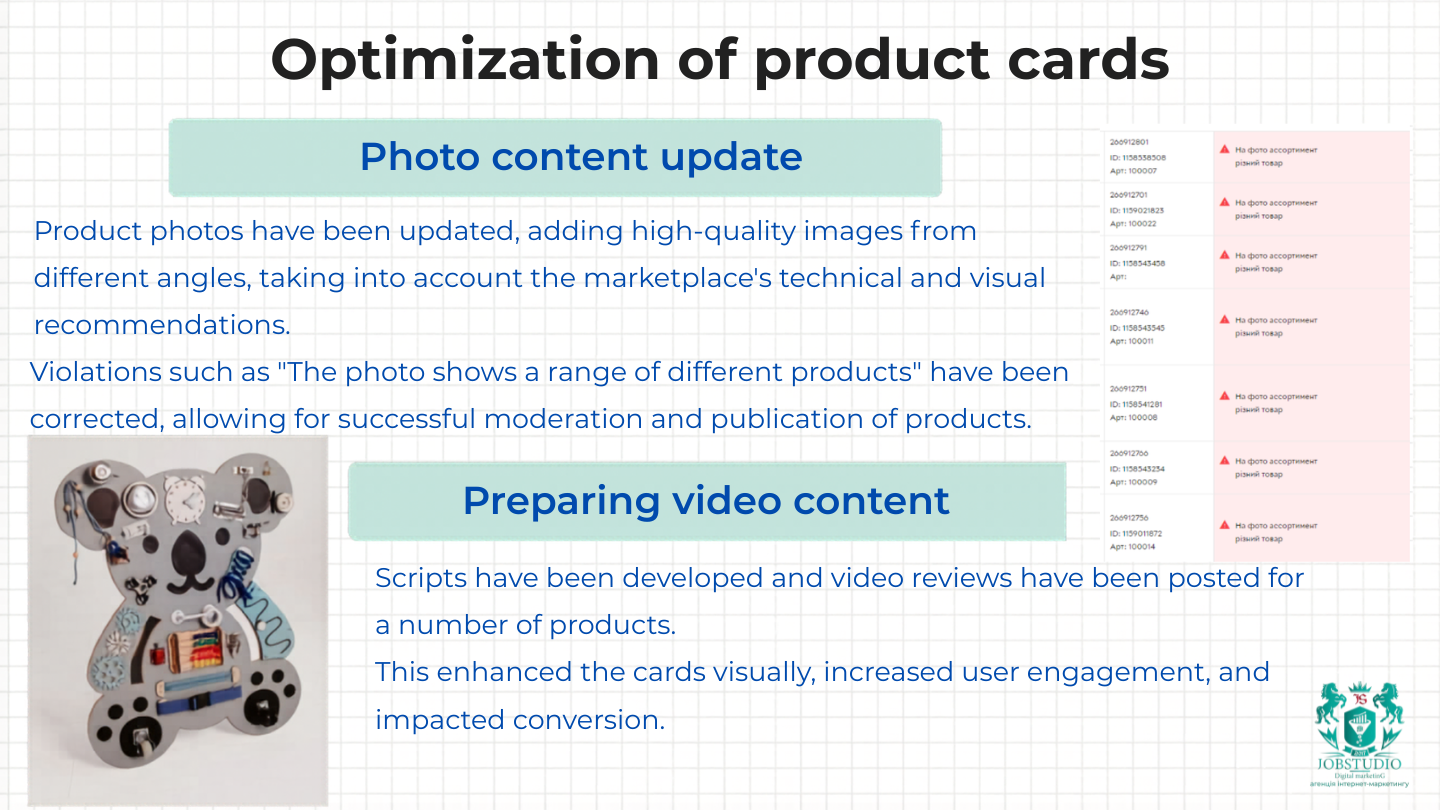
Video review scripts were created for some products, and video content was added to their product pages. This boosted trust in the products and had a positive impact on conversion rates.
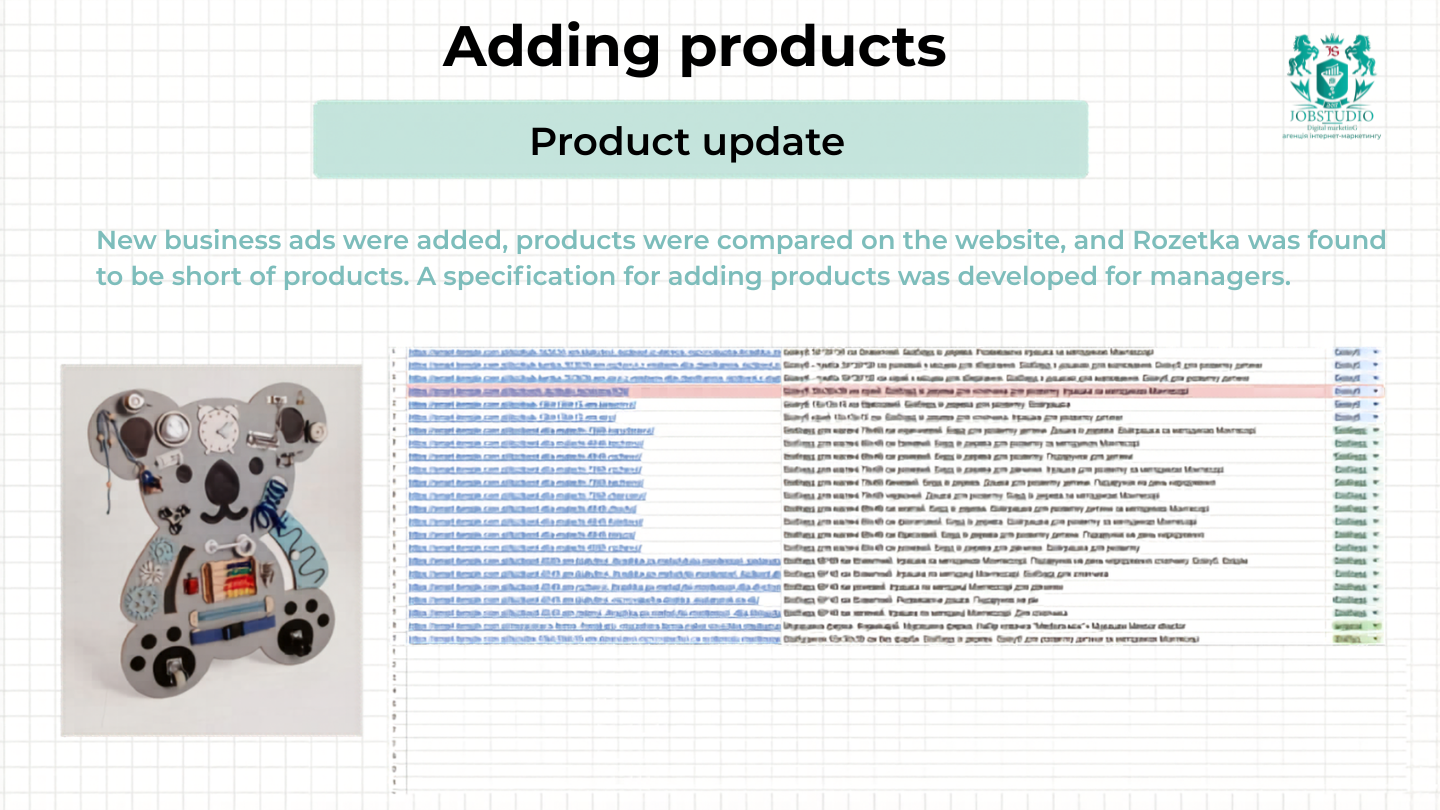
While working on the project, we compared the website’s product range with that on Rozetka and noticed that some items were simply missing from the marketplace. A separate technical specification was prepared for the managers to add new items. This allowed us to expand the product matrix without creating a chaotic layout or losing control over the categories.
At Rozetka, the payment method directly impacts conversion rates. That’s why we’ve enabled all available payment options, including online payment, cash on delivery, as well as “Pay in installments” and “Installment plan.” This has helped lower the barrier to purchasing more expensive items and expanded the pool of customers willing to place an order immediately.
In practice, this meant more than just “turning on a feature”; it involved navigating a technical and operational process: clarifying connection requirements, documentation, payment limits, refund policies, and the logic behind the financial mechanisms. This is exactly how a boutique approach works: it doesn’t stop at recommendations, but sees solutions through to actual implementation and operation.
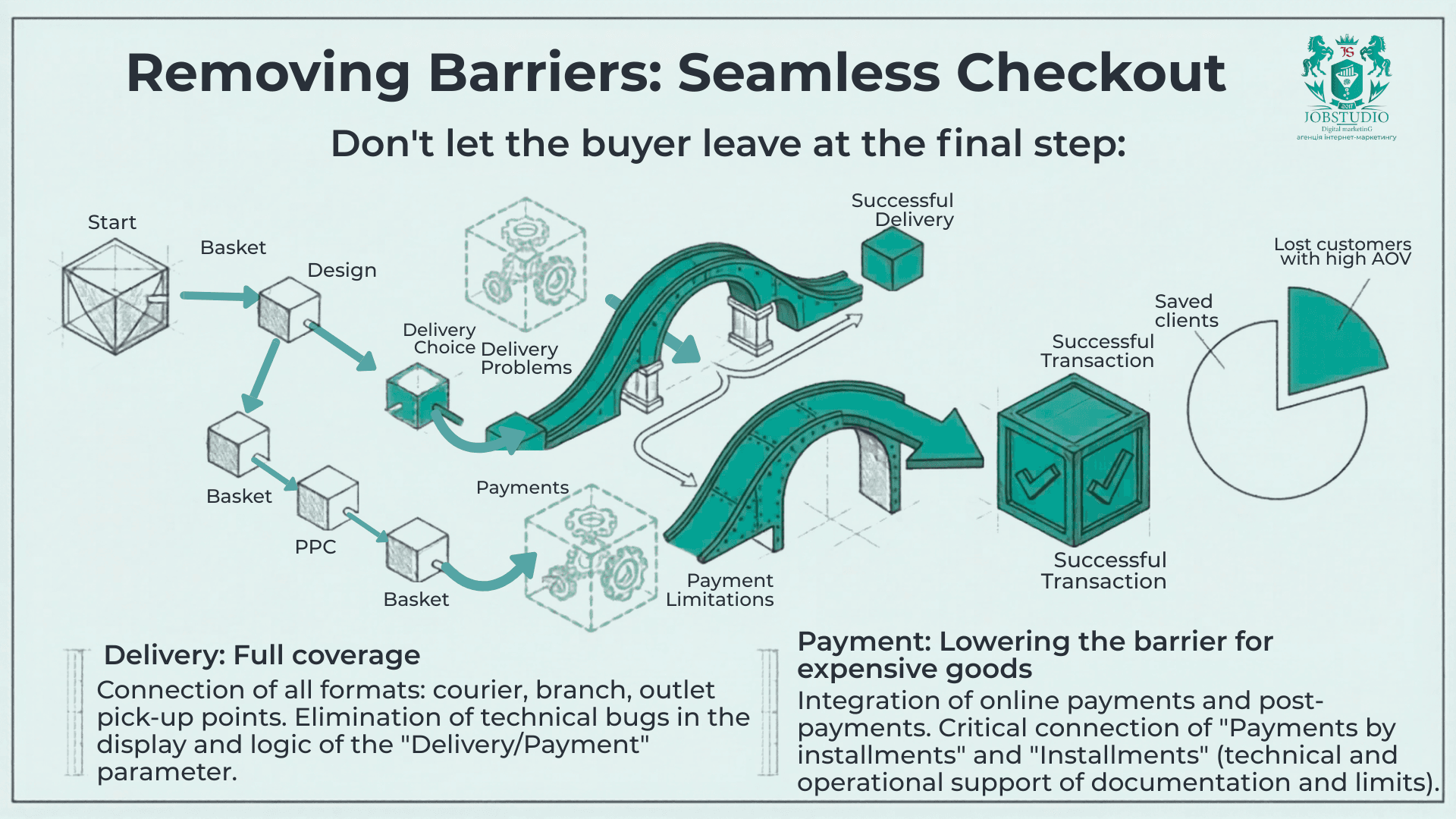
Properly configured shipping is a critical component of a product listing on a marketplace. We’ve enabled all available shipping options, including courier delivery, pickup at a branch, and delivery to Rozetka pickup points. At the same time, we’ve resolved technical issues related to shipping display and payment so that customers aren’t held up at the final stage of checkout.
As part of the workflow, this also involved clarifying shipping deadlines, refining the logic of the “Delivery/Payment” setting, monitoring payment for delivery to pickup locations, and disabling unprofitable scenarios where necessary.
This is one of the least noticeable but most important aspects of working with the marketplace. The portfolio itself includes a separate section dedicated to working with Rozetka’s technical support: issues related to products rejected by moderation, incorrect display of product listings, promotions, and sales; setting up installment payments; and clarifying product details, specifications, and delivery methods.
In practice, this wasn’t a one-time communication but ongoing operational support for the store: clarifications regarding categories, photos, changes to product listings, feeds, updates, moderation, promotions, logistics, payments, and advertising. For the client, this meant not having to “figure out the marketplace’s rules on their own,” but having a team that kept these processes under control.
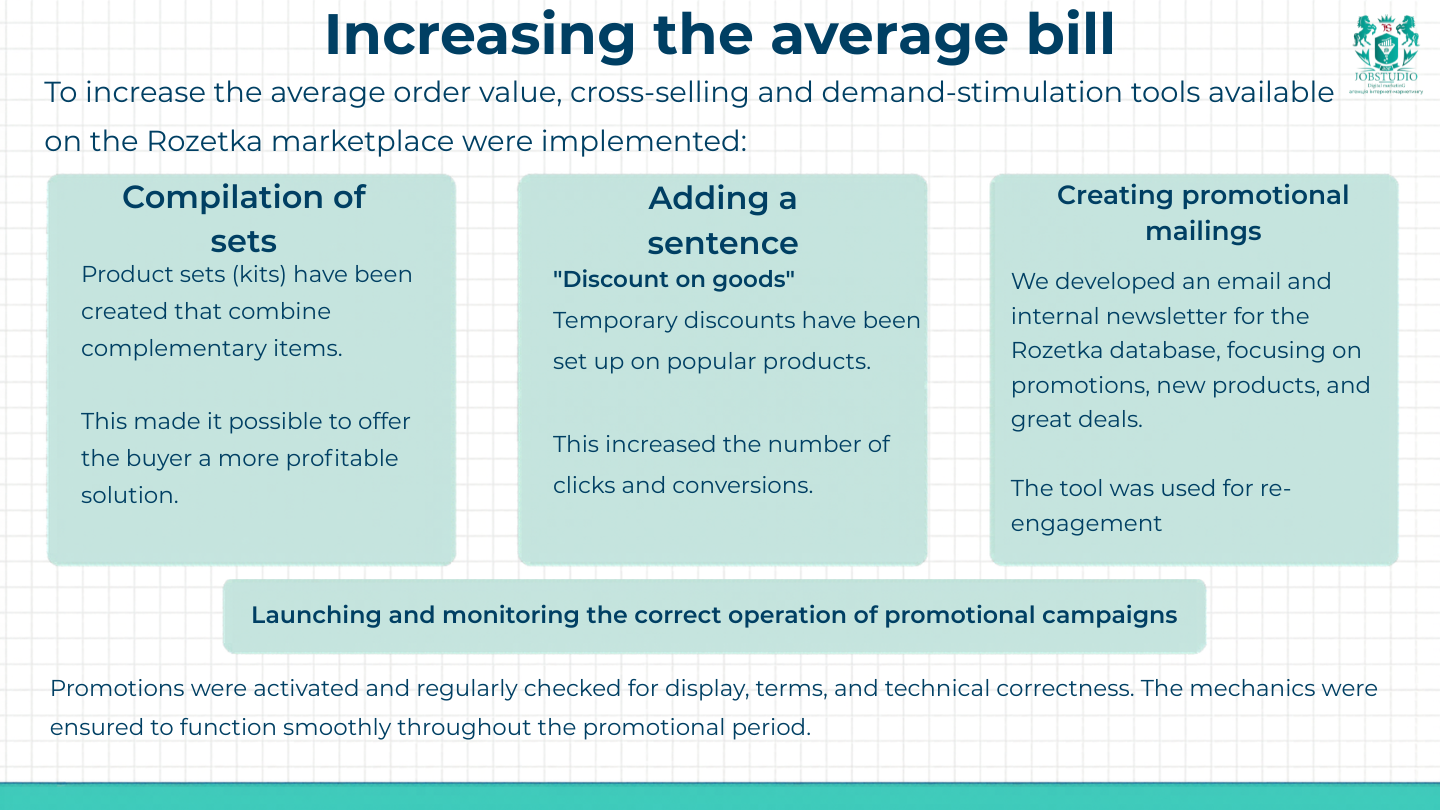
To grow not only in the number of orders but also in the average order value, we implemented strategies to increase the average order value. We created product bundles, launched limited-time discounts on popular items, and set up promotional email campaigns targeting the Rozetka customer base.
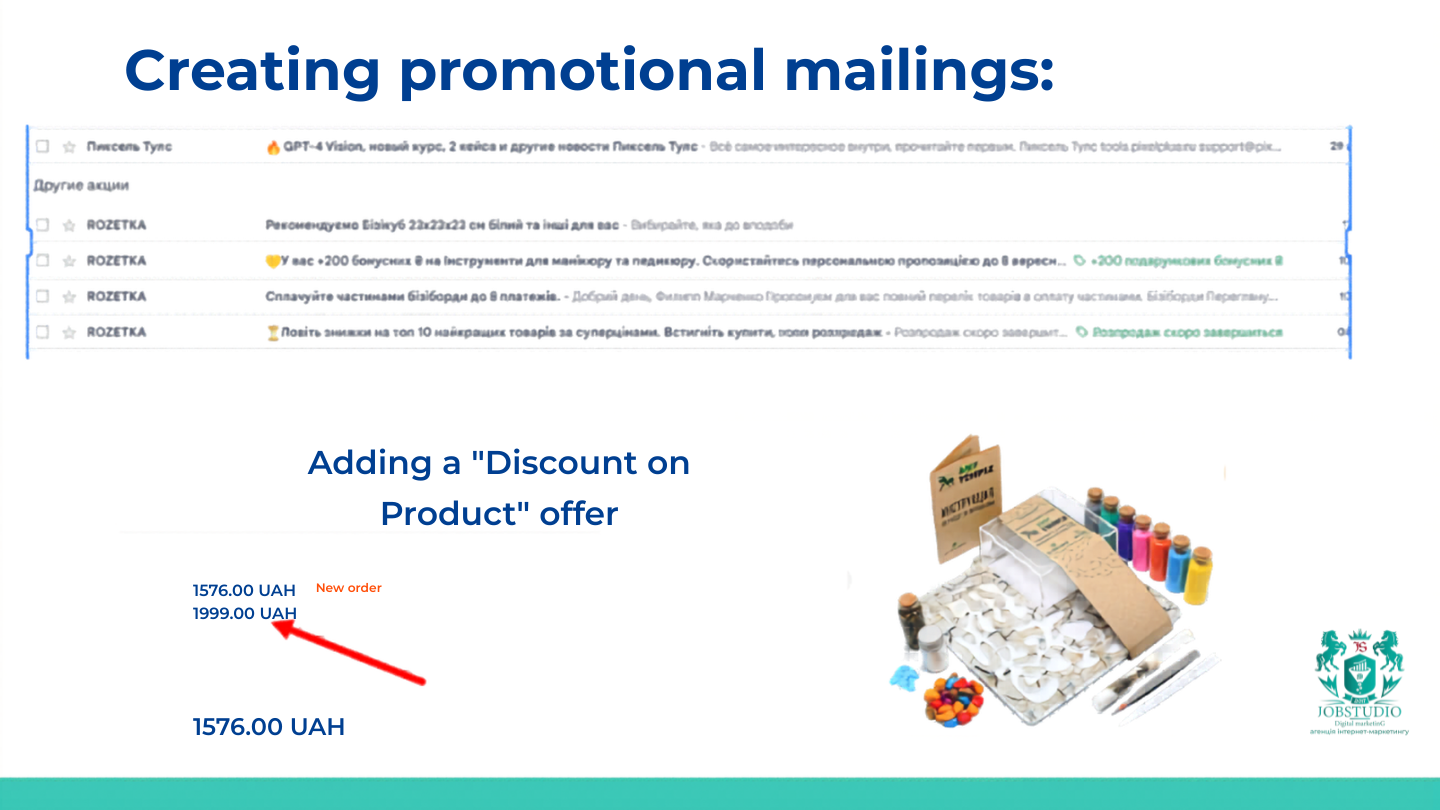
All of this was used to re-engage the audience, improve product packaging, and encourage purchases of more cost-effective bundles.
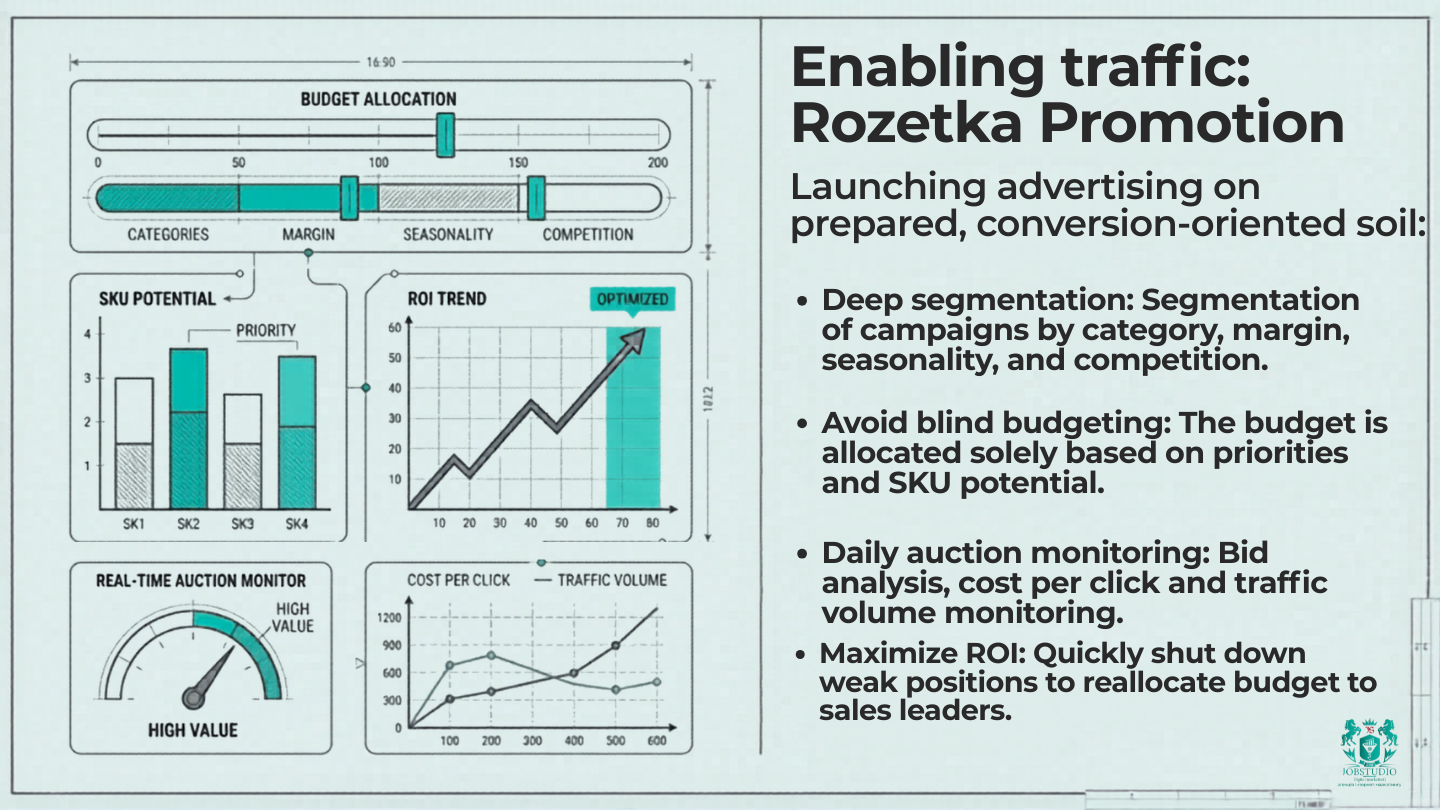
Once the technical and content-related issues had been resolved, we activated the Rozetka Promotion advertising system.
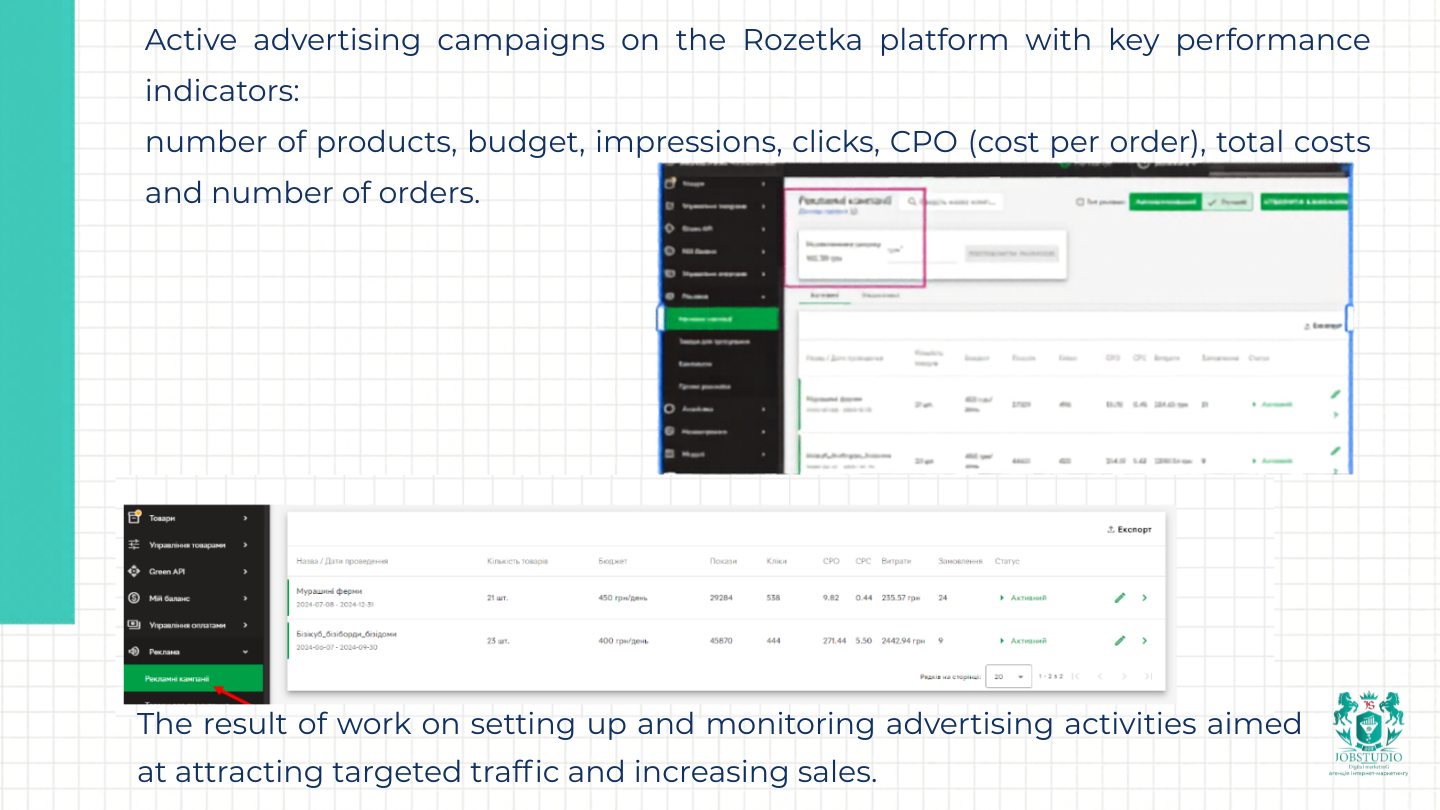
Advertising campaigns were designed taking into account product categories, the level of competition, seasonality, profit margins, and the potential of each product.
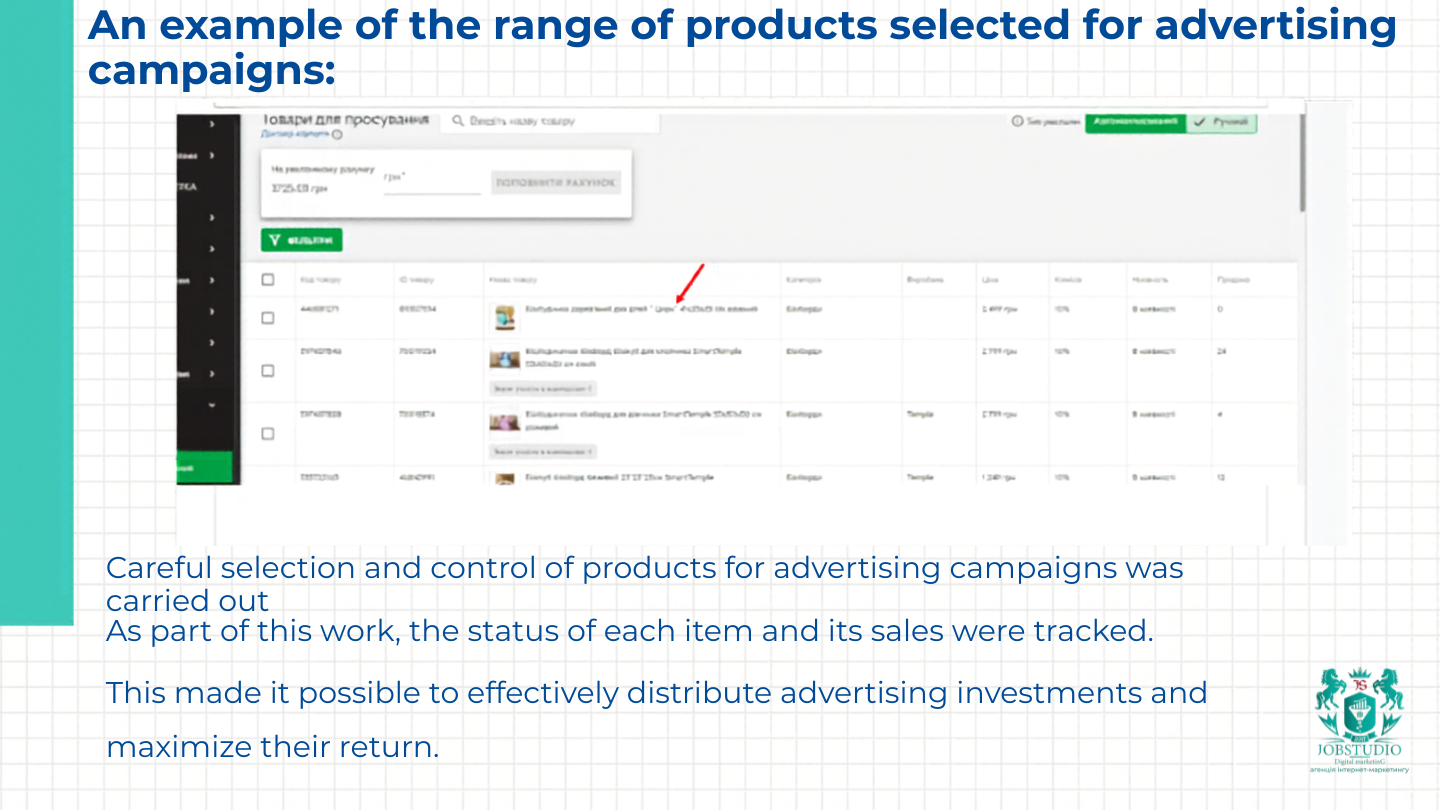
Separate campaigns with a standard structure were created for different product groups so that the budget could be allocated based on priorities rather than at random.
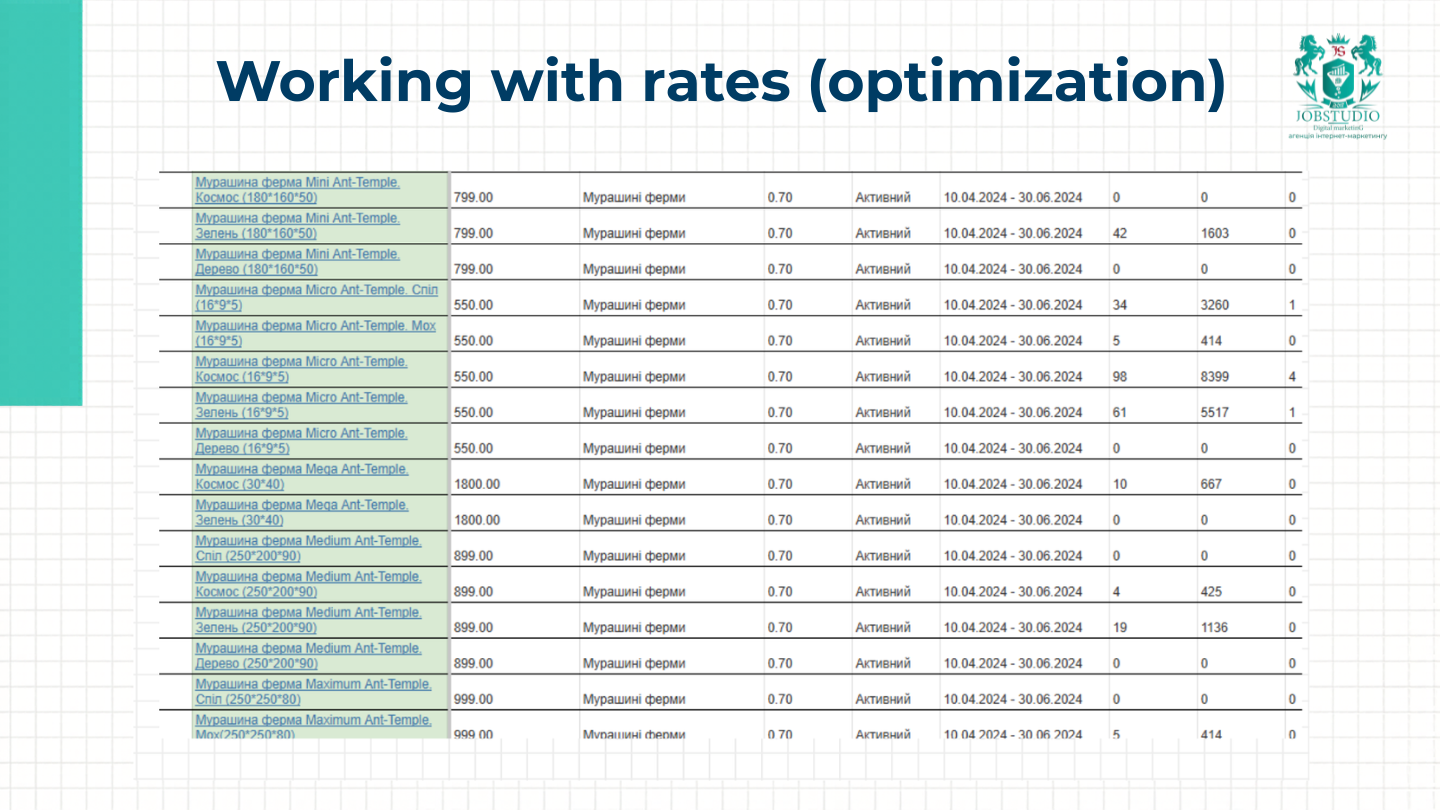
We regularly monitored bids, analyzed the auction, reallocated budgets across product groups, and temporarily paused underperforming campaigns.
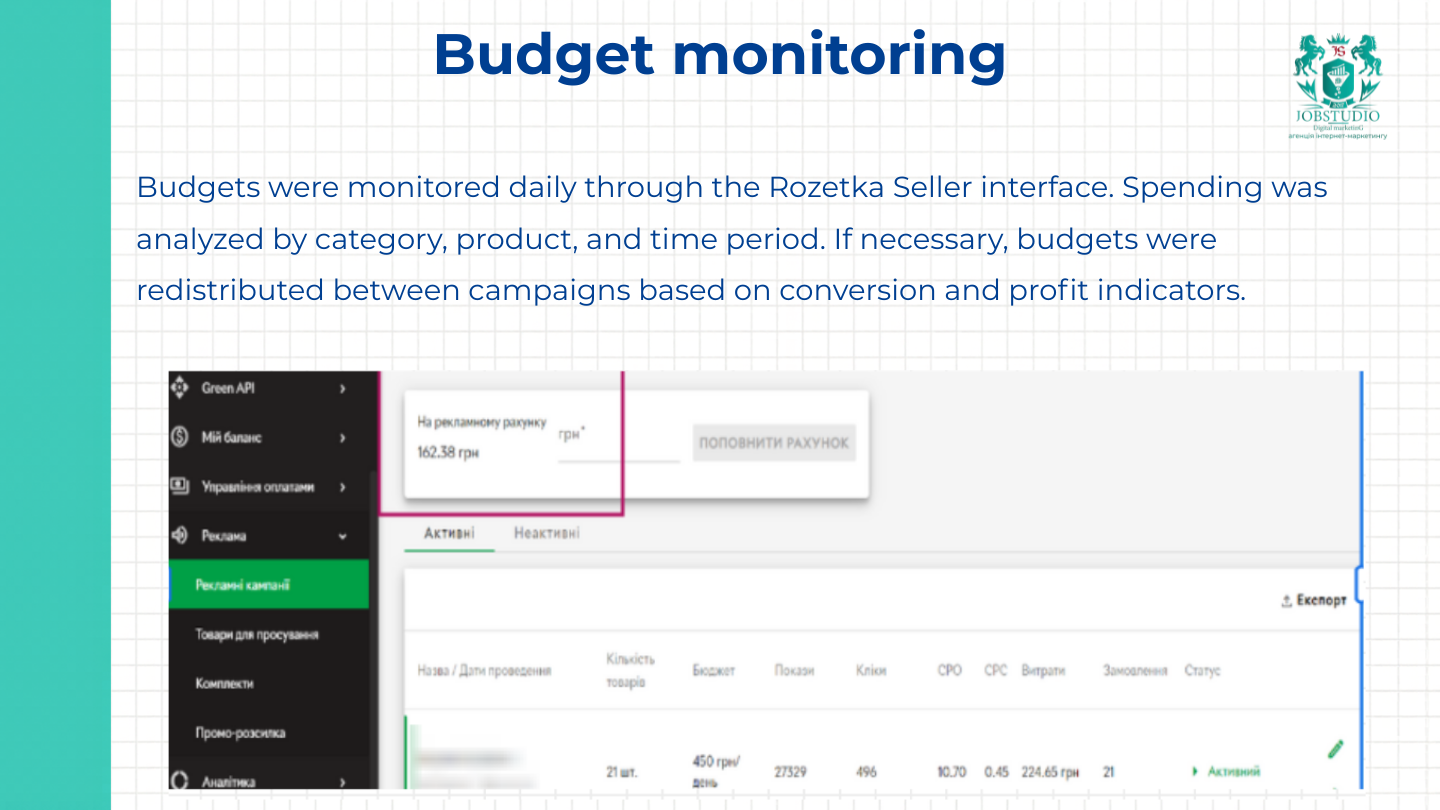
This allowed us to achieve a better balance between cost per click, traffic volume, and conversion rates.
The project was supported by weekly and monthly reports. These reports tracked current metrics, changes in rates, campaign statuses, promotion results, sales trends, and recommendations for further growth. For the client, this meant one important thing: instead of guesswork, they had transparent oversight of exactly what the team was doing and the results it was producing.
After fully optimizing product listings, integrating payment and shipping methods, and launching advertising campaigns, the store saw a 5.3-fold increase in sales. At the same time, system errors that prevented products from being displayed and passing moderation were resolved. Updated content, a properly structured product range, and promotional efforts increased buyer trust, improved conversion rates, and expanded the store’s reach on Rozetka.
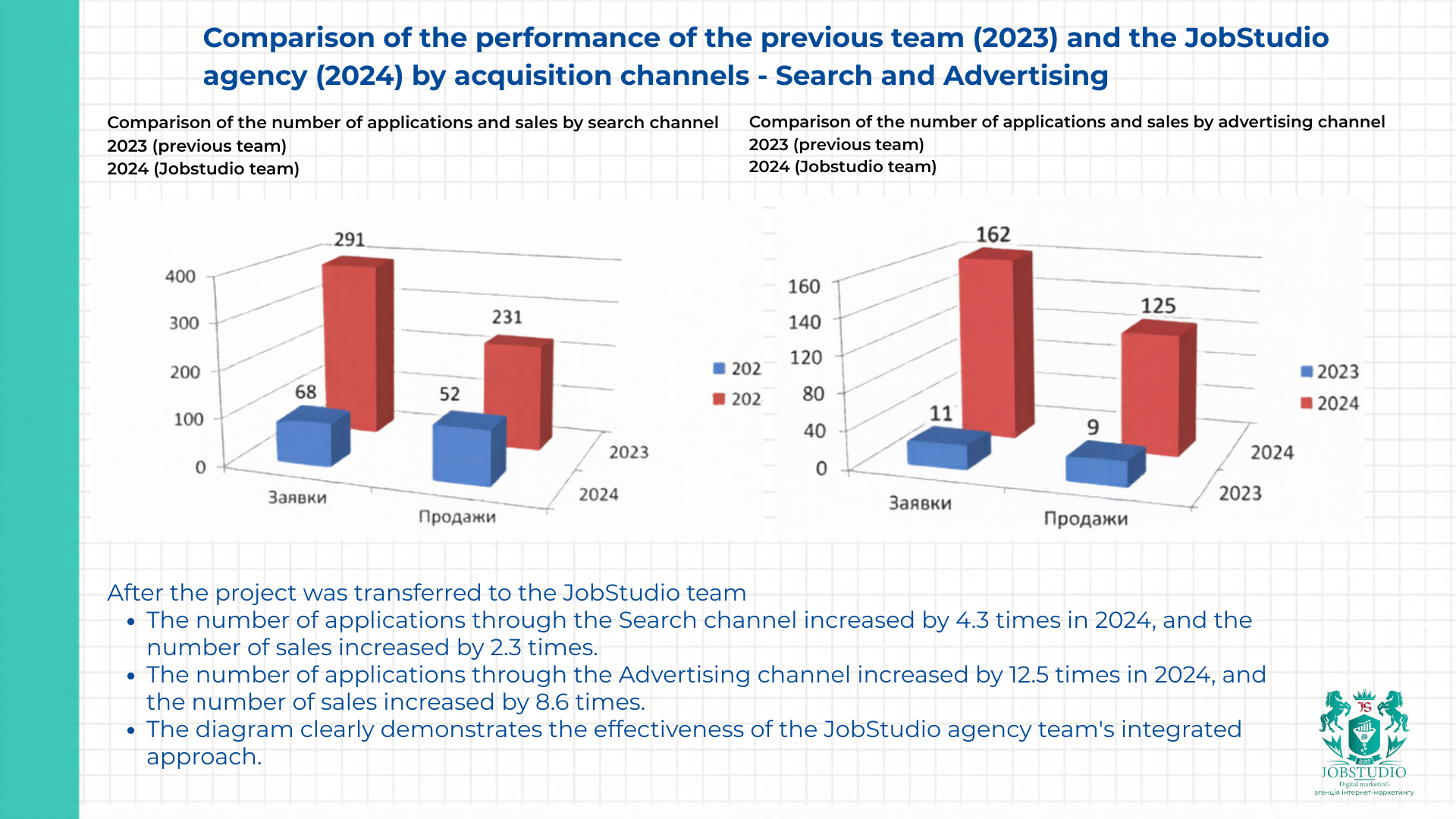
If we look at the trends compared to the previous team, the picture is as follows:
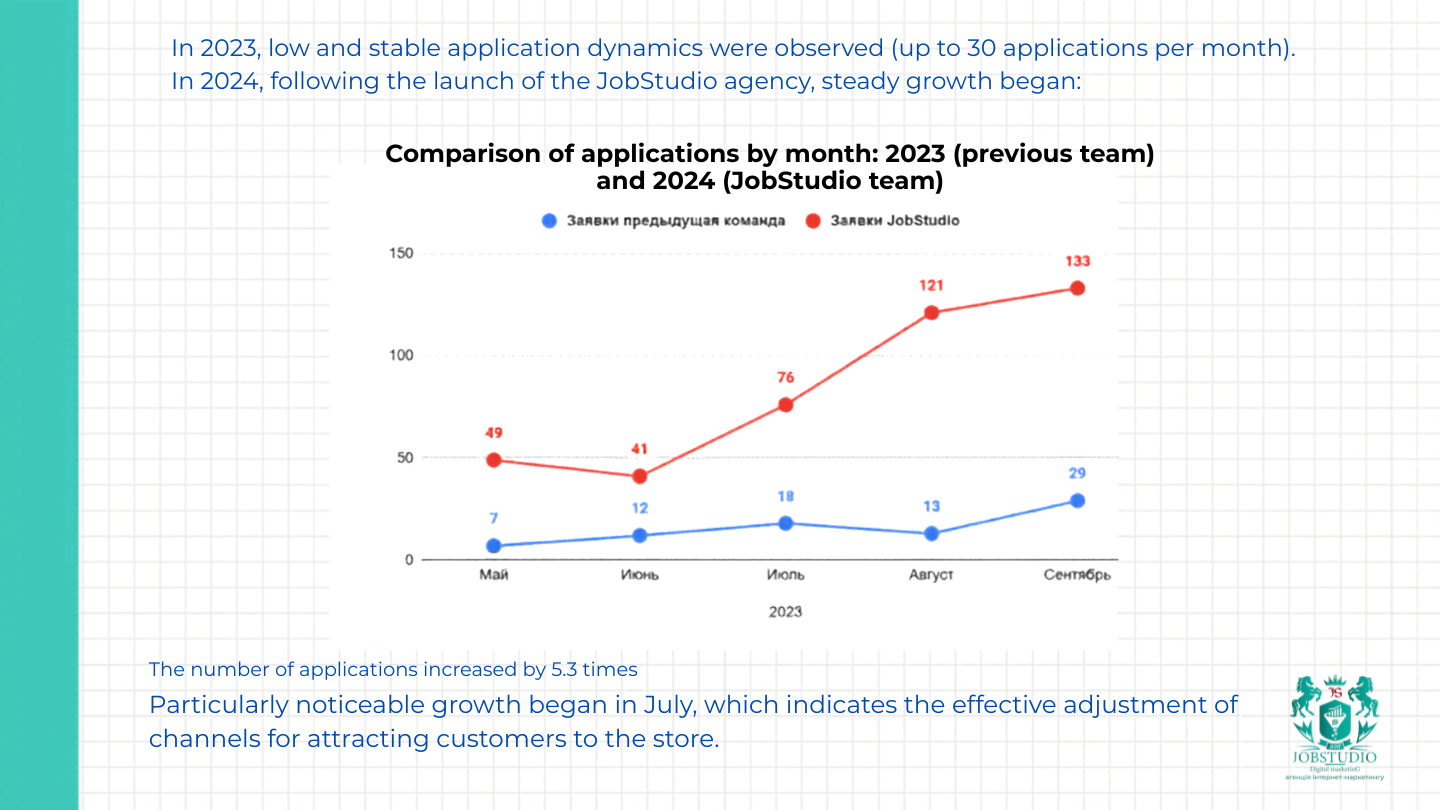
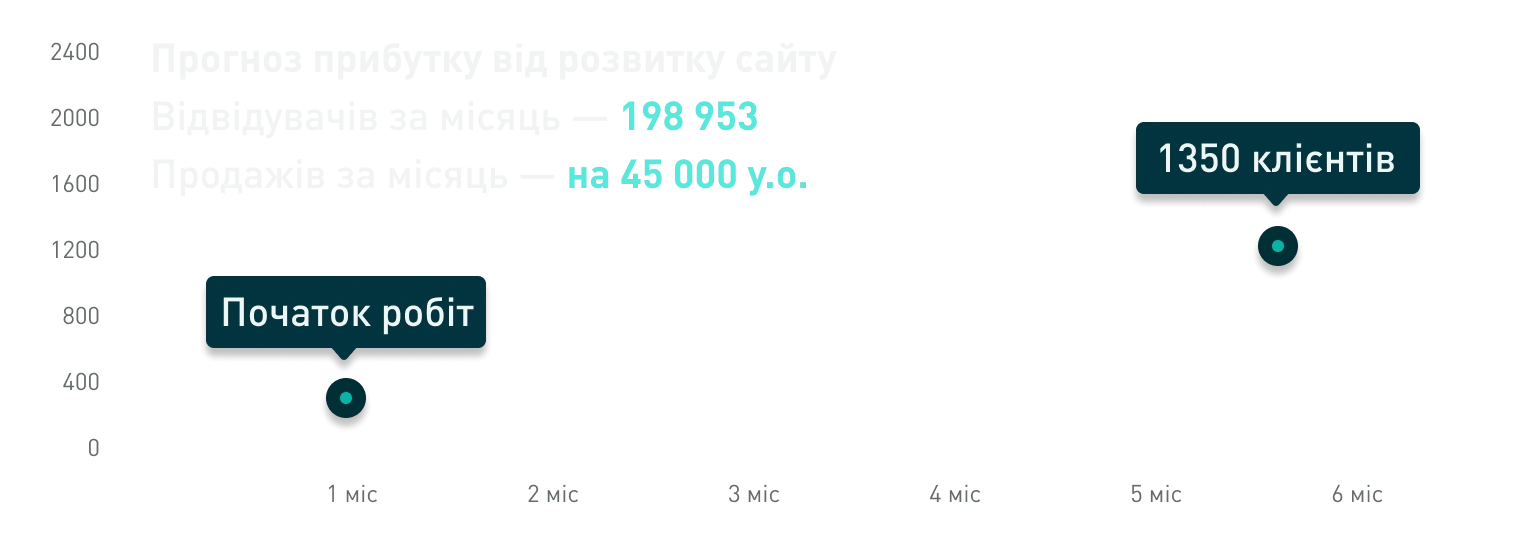
Overall, the number of applications increased 5.3-fold in 2024, with the most significant growth beginning in July.
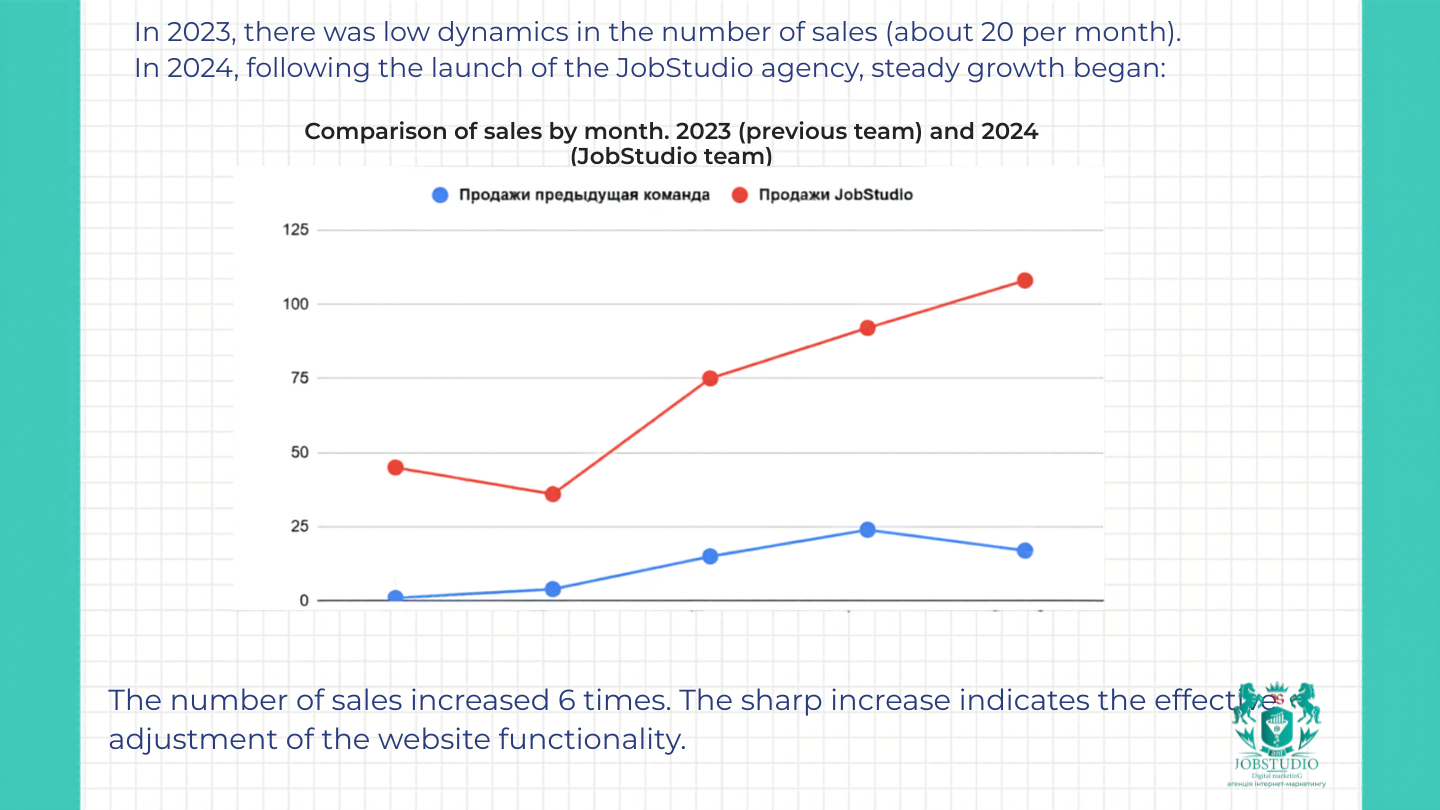
This is an important point: the result didn’t just appear out of thin air, but was the result of consistent work across the entire sales system within the marketplace.
This project illustrates a simple but important point: the “let’s just run ads” approach doesn’t work on marketplaces. Unless you understand product listings, specifications, moderation, payment, shipping, promotions, and the operational nuances of the dashboard itself, advertising will only amplify the chaos.
This is where the strength of JobStudio’s boutique approach really shines through. We didn’t follow a cookie-cutter approach or limit ourselves to a single narrow area. We dove deep into the project: from auditing and restructuring to technical support, promotions, rates, budgets, and reporting. When a team handles fewer projects, it can dive deeper into the business, adapt its strategy more quickly, pay closer attention to details, and have a more precise impact on the bottom line.
The Smart Temple case study on Rozetka isn’t just a story about a “successful ad campaign.” It’s a story about a comprehensive overhaul of the store’s operations on the marketplace: from the technical infrastructure and product listings to payment, delivery, promotions, and ad traffic management.
When all these elements start working together as a single system, the store goes beyond simply “having a presence on Rozetka” and starts actually making sales.
.webp)
 Contacts
 Language
 Book a call
 Order a proposal


